99 Fear Street:

The Home of A Harrowing Journey of Literary Comparisons

⚠ WARNING: DO NOT READ THIS ALONE ⚠

Reader Beware…

Below you will find a harrowing journey into the world of middle grade fiction. The 1980s and 1990s were the golden age for titans of horror. Of course R. L. Stine and Christopher Pike immediately come to mind as masters of fright for the newly literate, but the Baby-Sitters Club Mysteries and Sweet Valley High Super Thrillers provided their own inevitable pipeline to Stephen King novels for thrill-seeking young readers.

On this page, I will compare and contrast books on similar themes, in a quest to determine which tales would have most successfully terrified children of the 80s and 90s– and which ones hold up for adult readers today.

Welcome to the YA SHOWDOWN!

Join me for an adventure of nostalgia and terror… if you dare.

Be kind. Rewind. Lock your doors.

Welcome to the BlogosFEAR!

  • YA Showdown #8 (The Eighth Horror):

    Halloween Night (Point Horror) vs. Stacey and the Haunted Masquerade (Baby-Sitters Club)

    Interesting fact: Halloween Night by R. L. Stine was published in September of 1993 (the same month as The Haunted Mask). In reviewing The Haunted Mask, I noted that R. L. Stine often phones in the writing of his books (likely, in part, due to an untenable potpourri of competing deadlines). I loved The Haunted Mask and believe that R. L. put care into the creation of the book. Do you know where R. L. did not bring the same level of devotion? This godforsaken book. I knew we were on a good path when the tagline was: “Trick or Treat… The trick is not to die.” I’ve long suspected that R. L. doesn’t know what constitutes a good prank/trick, and this tagline lends further credence to this belief. We start with teenager Brenda who has recently been burdened with the arrival of her cousin, Halley, who has moved into Brenda’s family’s home while her parents get their divorce settled. Halley kinda sucks. She pursues Brenda’s boyfriend (in a particularly bold move, she borrows Brenda’s car and pursues Brenda’s boyfriend in Brenda’s car). She also pursues Brenda’s best friend’s boyfriend (but lucky for the BFF, her car is spared). Because Halley is nice to Brenda’s parents, they don’t see how awful she can be. The parents always take Halley’s side in a way that is a bit surreal, but Brenda also sucks, so ::shrug::. One thing I find interesting about this is that Halley sucks in overt and public ways, so pretty much everyone, besides Brenda’s parents and the boys she kisses in their girlfriends’ cars, knows how much she sucks. I feel like the more common trope in teen horror drama is for truly no one but the protagonist to observe the full magnitude of the sucky character’s sucking.

    Over the course of the book, we have three primary threads operating: 1. Halley sucking. 2. Harrowing “pranks” played on Brenda, including a decapitated bird in her jack-o’-lantern, messages written on her bedroom wall in blood, and maggot-filled meat in her bed (again, these seem to overshoot my understanding of what constitutes a prank and potentially veer into felony territory). 3. A class assignment requiring the teens (Brenda and her two friends) to write a murder mystery. Naturally, it is assumed that Halley is committing these horrifying “pranks” but I’m not so sure. Halley sucks in really overt ways, publicly pursuing people’s boyfriends, crashing Brenda’s car, etc. That feels like a different type of crappiness than leaving maggot-filled meat in someone’s bed. Plus, Halley is just too hot and having too much fun kissing everyone’s boyfriends to fill her time with such an icky series of tasks. Since our three girls (1. Brenda; 2. Brenda’s cuckolded friend, Tracy who also lost her boyfriend to Halley; and 3. Brenda’s tragically tall and single friend from a broken home Dina (I’m not kidding, Dina is described as being too tall to date); not to mention: she’s so poor due to her broken family that she has to work in a vet’s office!) are plotting a murder for class, and 2/3 of them have lost their boyfriends to Halley’s irresistible wiles, they think: Why not just murder Halley? We can come up with the perfect plot for our class assignment and then just implement it! Two birds; one stone (and it is pretty clear that this book has no trouble mercilessly slaying birds)! I already have a couple of concerns here. One, as an educator, I’m not sure that this is an assignment that I would give a cohort of teens, but at bare minimum, I would recommend, if you are going to encourage a bunch of teens to plot a murder for course credit, that you lay down some parameters, such as prohibiting plots against classmates. Two, I’ve never tried to get away with murder, but if I were trying to pull that off, I would probably not detail my plan and submit it to my teacher. Regardless of my professional reservations, here we are. The plan does not make a ton of sense to me. The girls will throw a Halloween party, and they will all swap costumes during the party so no one knows who is who, and then one of them will stab Halley, who will be wearing a giant gorilla suit… which will make it so that no one will know that she’s dead???? The next iteration of the plan makes slightly more sense to me. In the refinement, Brenda plans to get her crappy, cheating ex to wear the same costume as one of the others in the group, increasing the likelihood of him taking the blame. Based on my understanding, I thiiiiiiink this plan really only makes it such that someone in your friend group takes the fall, with the best case scenario being that the fall guy is your cheating ex (that said, it seems no more likely that he takes the fall than the other member of the friend group wearing the same costume). It just doesn’t seem to be the perfect way for you all to get away with murder, particularly since you documented your plan in meticulous detail and submitted it to a mandated reporter. Relatedly, they are loudly plotting this murder in a room where every word can be overheard via an air vent (Surely, that won’t become relevant, right?). Also- Perhaps the most unrealistic part of the book to me is that someone as hot as Halley would wear a full body gorilla suit on Halloween; surely, she’d at least be a sexy gorilla or something. Tall, homely Dina is getting cold feet (and given her size, I bet her colossal feet could hold enough chill to keep the witch’s brew punch cold all night), expressing concern that maybe murdering Halley is a bit much. Dina can, after all, remember how painful parents’ divorce can be given her own trials. Meh, whatever, the plan is still a go! I really enjoyed the part where the gals set up for the Halloween party. They get really into decorating, carefully placing creepy streamers and pumpkins all over the house. They really take the details of this party seriously for it only being part of a murder setup (I liked the bit where Brenda got so into hanging up crepe paper streamers that she almost forgot that she was about to commit a murder). In addition to the general crappiness of the plan, getting distracted by streamers makes me question her dedication to this plot. Their hard work pays off! The party is a hit. As planned, the gorilla gets stabbed and it takes a while for anyone to notice. BUT WHEN THE GORILLA MASK IS REMOVED, IT IS REVEALED THAT BRENDA IS INSIDE! Nooooooooo! Spoiler: Worry not, crew! Brenda’s eyes pop open, and she’s totally fine. In a classic Stine double switcheroo, the murder plot (the actual murder plot, not the creative writing assignment) was fake all along! Nobody ever thought Halley was pulling the grody pranks! Everyone knew that it was Dina desecrating animal corpses all along! This incredibly convoluted plan (that even has a few more layers that I am glossing over because I don’t quite understand them), was all to get Dina to confess. But why did Dina try to kill Brenda? Because she is tragically tall and felt unsupported by her friends during her parents’ divorce! But how did Brenda not die when she got stabbed? She’s a master seamstress and had added extra padding to the gorilla suit to protect herself! But how did Dina do all of this!? This is kind of glossed over, but the key idea is that she had access to all that gross animal stuff because she was a poor person working for a vet. Brenda and Halley, now BFFs despite the home wrecking and car wrecking, end the night laughing over some hot cocoa.

    What the hell? I know this is a work of fiction, but I feel betrayed by R. L. Stine here. This whole thing about the “real” fictional murder plot being a farce is B.S. Far too much of Brenda’s inner dialogue is related to the murder for it to not have been a genuine plot (again, I mean “genuine” and “real” in the context of a fictional book). My other grievance is that everyone in the book is just really crappy to each other the whole time, but not in ways that are particularly interesting or creative. I actually do think the depictions of teen girls as vapid and cruel can be harmful to how girls see themselves and how the world understands and treats them, so I wish these books would do better in this regard. Lastly, no one has sufficient motive to do any of what they do in this book. Halley has no real reason to steal Tracy’s boyfriend. Halley sucks but murdering her seems excessive. Dina has every right to feel hurt that her friends weren’t supportive during her parents’ divorce, but maybe either communicate that pain directly or hell, just cut them off (“ghosting” sounds like a spooky thing to do, so it fits right in here and seems healthier than murder). Murder seems a bit much. We got some indications throughout the book that our gals are creative: They craft diabolical murder plots, brilliantly hang streamers, and hand sew a series of elaborate costumes. Stine did them dirty. We should’ve at least gotten to see their creativity on greater display, both in terms of their artistic endeavors but also in terms of how they engaged with each other. I love a good villain, but alas, their cruelty just lacked the nuance and texture that these characters were capable of.

    For a comparison novel, I was looking for something where the main characters prepare for a Halloween party that serves as a site of revenge. That brought me to one of my favorite Baby-Sitters Club Mysteries: Stacey and the Haunted Masquerade “by” Ann M. Martin (ghost written by Ellen Miles). Ellen ghost wrote most of the BSC Mystery books, perhaps making her my favorite author in the world. In this harrowing tale, our protagonist, Stacey, famous for being a pretentious New Yorker whose parents moved to Connecticut, is trying to turn her life around after almost drinking some wine at a concert (I am not sure that I’ve ever read the book where that happens (or almost happens), but the incident clearly weighs heavily on her heart in this book). When an opportunity to decorate for a Halloween dance emerges, she jumps at the chance! Our girl, she’s got a vision, subverting the traditional orange and black color scheme for a red and purple one. Bold! Fearless! Innovative! Stoneybrook Middle School has a new teacher, Mr. Rothman, who has eagerly decided to jump in as the faculty advisor for the decorating committee (I don’t yet know where this is headed, but it does seem convenient/suspicious to me. I’m keeping my eyes on you, Mr. Rothman). Tragically, things are not going smoothly with the dance decorating. There’s some pre-teen drama that does not speak to my horror-focused heart, so I will skip over it. But worse than that, vandalism ensues! Someone smashes all the cool red light bulbs and tears up the posters. As if that is not bad enough, someone graffities the gym with “drippy, red, bloody-looking letters” with the message “Will you still love me tomorrow?” and “$10”. And if that isn’t horrifying enough for you, Stacey and the decorating team find a dummy “dressed in a pink, frothy, fairy, princess costume” hanging from a noose. (I think of rabid mouths as frothy, not dresses, but that is beside the point; that’s some scary shit!). I’ve gotta be honest, as disturbing as all of this is, I was not so shocked that things started going wrong with the dance prep. Very early on in the book, when the principal is announcing the dance over the intercom, he notes that this dance is the first Halloween Masquerade to be held at the school in twenty-eight years (quick note: that might be true, but this school is full of Halloween dances, namely “The Halloween Hop,” which appears in at least three other books. I feel like this factoid diminishes the power of the idea that this other type of Halloween dance hasn’t happened in 28 years). That this dance hasn’t happened in 28 years is suspicious. But much more suspiciously, the principal casually drops the phrase “Let’s erase those unpleasant memories and have a ball!” Ok, what? That’s just a really weird thing to say. What is most surprising to me is that as our intrepid pre-teen detectives are trying to crack this case (What happened 28 years ago? Might it be related to the current vandalism?), none of their parents, who would’ve been in middle school at the time, have a clear recollection of what happened (though a couple of the parents think that somebody died. I’m a little surprised that if someone died at their middle school dance, even if they weren’t in attendance at the dance, that they don’t have a more specific memory of the masquerade-based tragedy).

    Meanwhile, this is a very exciting time for me because Cary Retlin, one of my favorite characters, has hit the scene. Cary becomes infamous in the series for his elaborate pranks (Baby-sitters Fright Night was full of them, if you are looking for some more examples). But here we get the Cary origin story (kind of). He has just moved to Connecticut from Illinois, and he quickly gets to work being cool. He’s constantly winking at Stacey, which I think is supposed to be cool but kinda weirds me out. More relevantly, right as Cary shows up, a series of pranks overtake Stoneybrook Middle School, such as everyone’s books getting swapped between lockers, trophies in the locked case getting filled with candy corn, and every clock in the building being set ahead by 15 minutes. There’s a creativity and labor-intensity to the pranks that I admire (these are much better pranks than leaving maggot-filled meat in someone’s bed). I realize that I’ve read enough of these books to know that Cary is behind these, but it also feels pretty obvious given the timing. It’s also pretty clear that this all gets thrown in here to make us think that Cary is behind the dance sabotage, but please, that’s just not Cary’s style! Also, all of these sillier pranks are signed “The Mischief Knights” (that’s cool) and Cary shows up to the dance dressed as a chess piece (try to guess which one…) Very cool!

    Meanwhile, back at the baby-sitting ranch: All of the children of Stoneybrook, CT, have become obsessed with the Ghostbusters. We get a series of a million vignettes about baby-sitters going to children’s houses and the kids going wild with ghost hunting. These kids are enterprising, working with fairly sophisticated handmade DIY ghostbusting supplies. It is inspiring. My favorite ghostbusting sequence features frightening noises observed by a pair of twins who are fully ignored by their parents (Note: This is some R. L. Stine garbage. Sure, I get why you might not agree with your kids’ conclusion that there is a ghost infestation in your house, but I would think if your kids express concerns about suspicious rustling sounds in the house, it might be worth your while to at least take a peek around???). Anyway, the baby-sitter also hears the sound and “visions of long, clawlike fingernails” flashed into her mind. It’s funny to read this scene as an adult because I’m like: That is obviously a squirrel. And yep, I was right. As an adult, who has had to deal with squirrels in my house, this was without a doubt one of the most frightening outcomes of this scenario. I feel a bit of anxiety just thinking about it, a rare case where a scene in one of these books has become more harrowing with age. How times have changed.  

    To recap where we’ve been so far, similar to Halloween Night, this book features three throughlines: 1). WTF is going on with the dance vandalism and might it relate to the vaguely alluded to tragedy of 28 years ago? 2). The arrival of Cary Retlin and obviously associated onset of elaborate pranks. 3). “Ghostbuster fever” having swept over the children of suburban Connecticut. As you may recall, my primary grievance with Baby-sitters Fright Night was that the main plot never intersected with the baby-sitting subplot. The unexpected ways that the main mystery plot and the baby-sitting subplot typically intersect is one of the more satisfying aspects of the BSC Mysteries, IMO. Welp, our girls have been up to a lot of sleuthing. Because their parents have been surprisingly unhelpful, they’ve resorted to other means. First they looked at old newspaper articles (from 28 years ago… dun… dun… dunnnnnn) on the microfilm reader at the public library. And then they snuck into the creepy old record room in the basement of the school (dun… dun… dunnnnnn) to dig through student records. I was living for both of these scenes. I love a good library scene, especially one with dated technology (I LOVED using the microfilm reader at my hometown’s public library circa 2002, even though every time I would use it the librarian would note that probably whatever I was looking for had already been digitized. I hadn’t wanted to resort to modern technology though. Using that old machine made me feel like a detective. In retrospect, it was probably because of these books that I linked using microfilm readers to look at old newspapers with solving crimes. Also in retrospect, since I hadn’t had a specific crime that I was trying to solve, it seems kind of unlikely that a decades-old newspaper would give me a fresh lead. Oh well, it felt glamorous!). I also love an old record room (I recently received a private tour of a university archive and similarly felt like I was going to stumble upon something that would absolutely blow a cold case wide open. No success, just yet!). Ok, reining in my library-based reveries to focus on this book: This was all really fun to read (for me at least). By the end of the microfilm and basement record room expedition, we had learned the following: Twenty-eight years ago at the Halloween Masquerade, the lights went out, resulting in a stampede, which ultimately led to one of the teachers chaperoning the dance dying of a heart attack (he wasn’t trampled to death, he just died of shock; this makes me wonder if maybe it was just his time to go, but no, I guess it is best to place the burden of the blame of this tragic death on the shoulders of some scared middle schoolers). I enjoyed the discussion where the girls consider if the ghost of the teacher is the one vandalizing the dance; I like really love this idea, but sadly (spoiler) that does not end up being the resolution. We find out via some additional collateral information gathered by one of our girls posing as a reporter to interview a man who loves to write angry letters to the editor about how his tax dollars are going to pay for this dance: The lights going out at the dance was likely part of some sort of prank caused by a “jilted” girl. She took the blame for the incident and left the school (A couple of things about this: 1). I don’t care what a fuddy duddy this guy is for regularly writing insufferable letters to the editor to the newspaper, I’m so grateful that some adult finally remembers something of substance about this public tragedy; 2). As a letter to the editor enthusiast, this annoying man is my favorite unnecessary side character, it’s just such a spot-on portrayal of smalltown newspapers; 3). When the obnoxious regular letter to the editor guy was introduced, I made the ageist assumption that he was probably incredibly old. Joke’s on me, this dude is about my age!). Ultimately, the basement sleuthing gives us some important information: 1). The mysterious dance decoration committee adviser, Mr. Rothman, attended the school the year of the tragic dance, 2). The identity of the jilted gal who left the school in disgrace (Elizabeth Connor) and her former address (which is conveniently the very same house where the next baby-sitting job is scheduled! Access to potential sites of clues seems to be an underappreciated perk of working as both the town’s primary baby-sitting service and detective agency!). Moving on to the baby-sitting job: Since the kids at the house want to go ghost hunting (because of course they do, currently no child in this book has any other interests), the baby-sitters seize the opportunity to also look for clues. You might think that all signs of the jilted gal would have disappeared from the house that she last lived in 28 years ago. While that might be the case for lesser detectives, our gals stumble upon a big, convenient lead. The sleuthing baby-sitters find a heart etched into the wall of the attic that contains the message EC + MR). That must mean Elizabeth Connor + Michael Rothman… right?! The next day we interrogate Mr. Rothman about this discovery, and he provides an inappropriate amount of detail about the tragic event (we seem to have overcorrected from most of the other adults who have like no recall). Blah blah blah, he was so handsome and so popular and so nice and so cool blah blah blah. His friends pressured him into asking a nerdy gal (Elizabeth) to the dance as a joke and offered him $10 if he follows through with it (not cool, bro!). He caves to peer pressure. NO!!! She shows up to the dance in a “frothy pink fairy princess dress” like the dork she is. Ultimately she finds out about the dare –> she flips the circuit breaker –> the lights go out –> the students stampede –> teacher death –> she moves away in disgrace (sure, the dude shouldn’t have taken the dare and the girl shouldn’t have turned out the lights, but the consequences really feel like they outweigh the crime here; Sweet Valley Books are also fond of dances ended in spectacular tragedy that seems disproportionate to the antecedent; See: The Jungle Prom Saga). Based on the vandalism featuring graffiti of the song that was playing  when Elizabeth found out about the dare and the amount of money associated with the dare and the hanging dummy wearing the dress that Elizabeth was wearing that fateful night, I feel fairly confident we have our culprit. But how does this all get resolved? Surely, they might cancel a dance if a deranged, jilted woman is committing such harrowing acts, right? Nope! I guess they’d spent too much money on red lightbulbs and purple streamers (I mean, they did have to replace the first set that was destroyed by this vandal. There’s no way they could afford to refund those tickets. So anyway, the dance is real cool! Stacey did a great job decorating. People are stoked. Nothing could possibly go wrong. Spoiler: Right as the great masquerade unmasking is set to take place, we discover that some mysterious woman has stolen the cloak that Mr. Rothman’s date was wearing. But… But… But… If the now cloakless date is standing over there talking to a baby-sitter… who is the cloaked woman dancing with Mr. Rothman???? The lights are set to flicker off during the unmasking (that feels a little dangerous/insensitive to this great tragedy that everyone but also no one remembers wherein someone died because of the pandemonium caused by the lights going out, right?). When the lights come back on: “I looked over at the spot where I’d seen Mr. Rothman. He was still there, only now he was white as a sheet. Standing in front of him was a woman wearing a tattered and torn pink fairy princess costume. A black cloak at her feet. Michael Rothman stared at Liz Connor, and she stared back at him with a wild gleam in her eyes. She smiled slowly.” Holy shit! That’s terrifying!

    Okay, I absolutely loved this one. The microfilm. The dusty basement archive. The posing as a reporter to talk to the fuddy duddy letter to the editor writer about his opinion on tax dollars. The creepy ending. The improbable but entertaining tie-in to the Ghostbusters baby-sitting side plot. The introduction to the Mischief Knights. It was a very fun and spooky read. Ellen Miles knows how to deliver an enjoyable mystery novel.

    These two books ended up having even more in common than I’d expected. Both feature a lot of dense description of the minutiae of Halloween party decorating by our main characters. While both books utilize the Halloween party as a site of revenge for wronged teenage girls, in Halloween Night, the characters specifically throw the party to create the setting for the revenge plot, whereas, in Stacey and the Haunted Masquerade, the party inadvertently (though predictably if any adult was paying attention) offers a convenient spot to revisit old grudges. In both cases, the act of revenge feels a bit disproportionate to the original crime (that said, it isn’t exactly clear what Elizabeth’s end game is). Both books leverage parallel sets of pranks/bad behavior as a red herring for the more sinister occurrences. Ultimately, the BSC book delivers a satisfying ending without a series of convoluted, deceptive, and borderline nonsensical quadruple fake-outs. While both books have some drama in them, I appreciate that the BSC book allows the characters to have attributes other than pettiness and vindictiveness (and talents related to Halloween decorating and costume creation, which I think still leaves them with only petty and vindictive traits for the remaining eleven months of the year).

    Showdown Winner: Stacey and the Haunted Masquerade (Baby-Sitters Club) by Ann M. Martin/Ellen Miles by a wide margin.
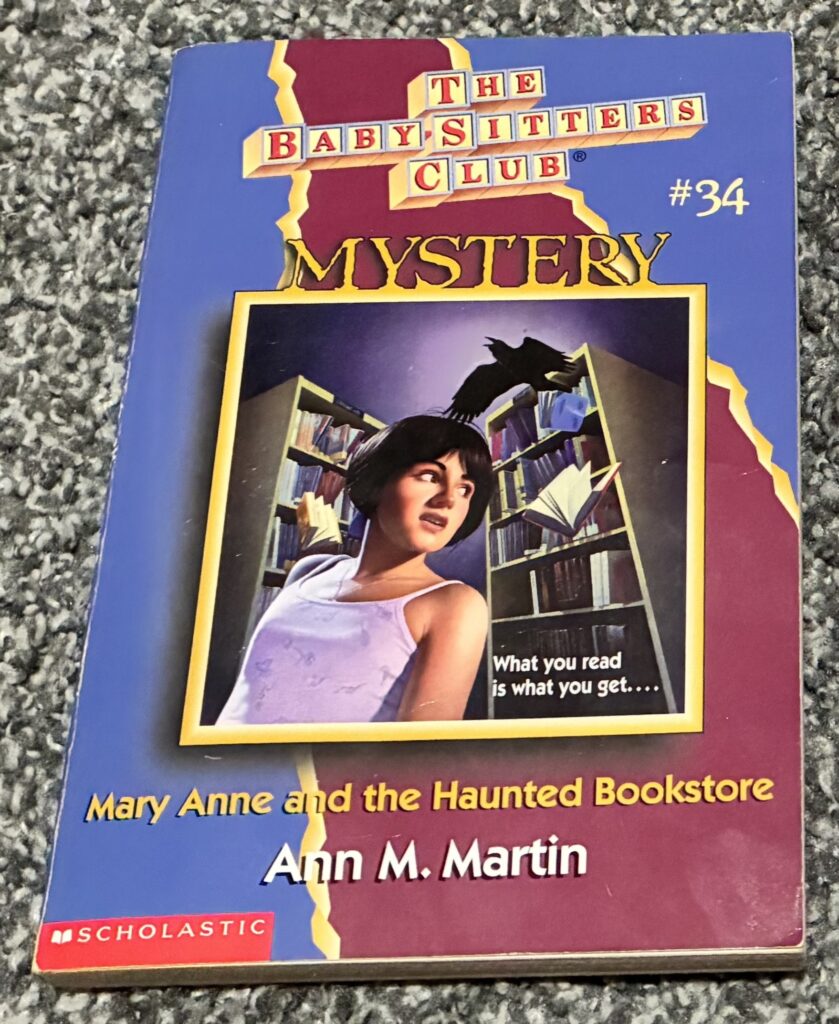
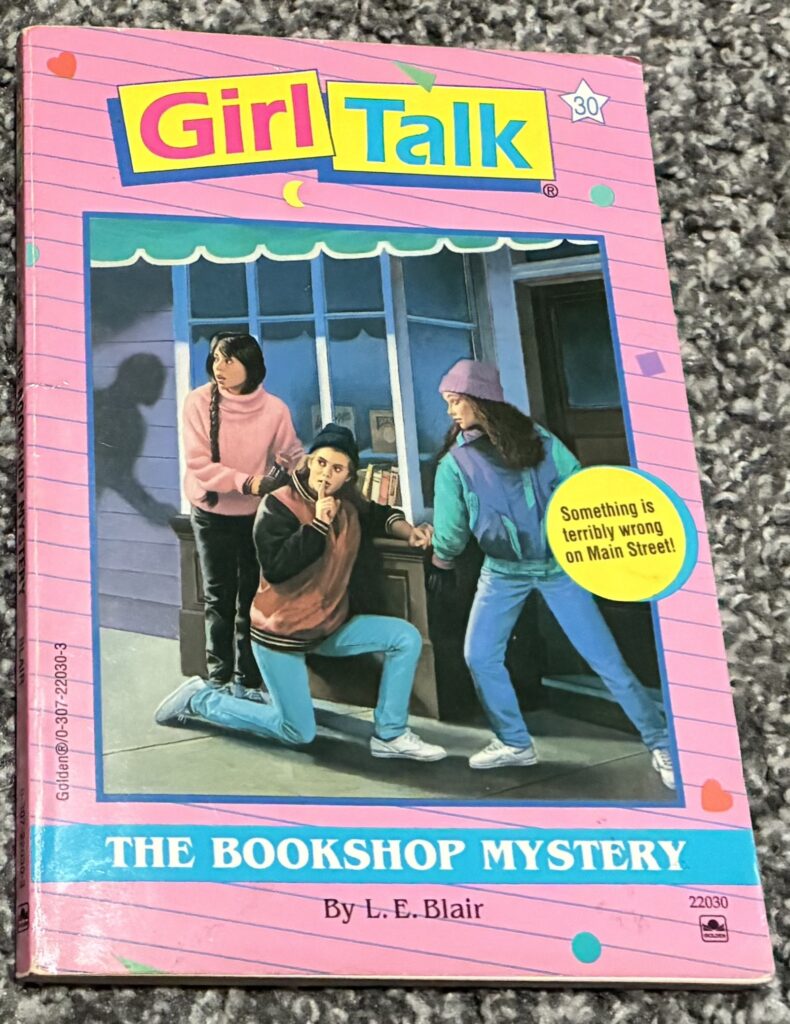
  • YA Showdown #7 (The Seventh Horror):

    The Haunted Mask (Goosebumps) vs. Evil Elizabeth (Sweet Valley Twins)

    The Haunted Mask is the 11th book in the Goosebumps series by R. L. Stine. It was originally published in 1993, and I would argue that it is the quintessential Halloween book of this genre. Carly Beth is a shy, mousy, and easily frightened girl who is often the target of mean-spirited pranks because she is easy to scare and kids can be jerks. Two kids in her class, Chuck and Steve are notoriously unkind to Carly Beth, at one point going so far as to give her a sandwich with a live worm in it (seriously, that’s messed up!). In classic Stine fashion, this prank renders Carly Beth blood thirsty and desperate for revenge. ‘Tis the season after all! I find the next bit to be some of Stine’s best writing: Carly Beth is upset and talks to her mom about it. During this scene, it is revealed that her mother created a model of her face out of plaster of Paris and has found a duck costume for her based on a passing comment that Carly Beth had made about liking ducks. Carly Beth feels disappointed because she wanted to dress as something scary and not baby-ish, which I really get given all of the bullying that she is enduring. Her mom is quite kind, and Carly Beth is a bit snippy and ungrateful, which she then feels guilty about. Honestly, I thought this was a really good depiction of the tensions of adolescence (Note: I feel like Stine phones in a lot of his writing, but over the course of this series, I think that he often does a spectacular job of capturing how hard it can feel to be a kid). Bloodthirsty Carly Beth heads to the new Halloween costume shop (with her “life savings” of $30, which I find to be a really charming detail), intent on finding the perfect mask with which to scare Chuck and Steve. She stumbles upon the secret revolting masks in the backroom and insists on buying one. Originally the shopkeeper is like, “NO! These are far too scary!” Carly Beth insists she must have one, and the shopkeeper ultimately agrees to sell her one (As I recall, in the television episode she quasi-steals the mask, but I think it is important to let the record show that in the book, he willingly sells it to her with nothing but the vaguest of warnings). Long story short, as she wears the mask on Halloween night, she becomes a menace, terrifying children all over town and stealing their candy. A particularly iconic detail is that she takes the plaster of Paris model of her head and places it on a stick, friggin’ waving her piked head all over the place. She successfully scares the pants off of Chuck and Steve (and steals their candy in the process). Honestly, even though she is obviously possessed by the dark powers of the mask at this point, I’m rooting for her hardcore, and I am particularly fond of the moment where she threatens to put their heads on pikes too, just as this unidentifiable, harrowing creature had supposedly done to poor Carly Beth. Total icon. All good things must come to an end, and Carly Beth becomes alarmed when she cannot remove the mask. This goes on for quite a while. She finds the shopkeeper again. He tells her that the mask is actually a real, living face that he had created that became grotesque over time (the science on all of this is a tiny bit unclear). He gives her some vague clues about “symbols of love” and tells her that if she does manage to get the mask off thanks to his cryptic, unhelpful advice, that it’ll permanently adhere to the next face that wears it. All of the other masks in the back room start to chase Carly Beth for reasons that are a wee bit murky to me. Spoiler: She realizes that the model of her face is a “Symbol of Love,” and then in a real, multi-layered Carly Beth face sandwich Russian nesting doll simulation, she puts the replica of her face over her mask (which is already over her face). Good thinking, CB! I’d have been fucked if I was in this situation. Never would’ve thought to do that. It works great. The other masks leave her alone and she successfully removes the mask. She returns home, much to the relief of her anxious mother who has been waiting up for her. Just as things are starting to look up, her younger brother appears from the other room wearing the mask. (Reminder: The shopkeeper had warned CB that the next person who put on the mask was screwed). I get that Carly Beth was flustered after that ordeal, but it may have been wise for her to have more cautiously disposed of such a dangerous facial covering. But alas, she didn’t. Bad news, little guy!

    Honestly, I thought this book was fantastic. I’ve read it a few times over the years, at least once as a child and most recently in 2022. I’ve seen the episode more times and have conflated the two in my mind. Honestly, the biggest difference to me with the book was that the shopkeeper willingly (admittedly under a bit of pressure) sold the mask to Carly Beth. Seriously, someone call the Better Business Bureau on this guy. Vague warnings are not sufficient when selling such a dangerous and demonically-possessed product to a young child. Also, if you know you are in possession of a dozen highly cursed artifacts, maybe don’t make them so easily accessible in your horror shop. I will give the guy credit though, he manages a really cool store, and Stine did a good job of world-building here (Things Stine is really good at: Depicting pre-teen feelings and creepy edifices). One other comparison to the episode: Though the science is still vexing, the episode did a better job articulating why the heck the dude made these faces to begin with (That gets real glossed over in the book. Like really, who the hell is this guy? How and why did he make these faces? How did he pivot from mad scientist to shopkeeper? Why does he fail to take even the most basic precautions to keep his community safe?). Ultimately, I refuse to think of Carly Beth as a victim of a curse. Carly Beth is a queen, and I am glad she chose to take control of her own power.

    I will be contrasting The Haunted Mask against Evil Elizabeth, a Sweet Valley Twins Super Chiller novel by Francine Pascal published in 1995 (two years after the Haunted mask). Allow me to present to you an excerpt from the back of the book summary: “Everyone thinks of Elizabeth Wakefield as the nice twin. That’s why she loves her Halloween mask—it’s so scary that no one can believe Elizabeth is behind it. But her appearance isn’t the only thing that changes when Elizabeth puts the mask on—little by little it makes Elizabeth act evil.” So okay, this is not so subtly a flagrant Haunted Mask rip-off, right? The question, then, is: Did the SVT series perfect the art form or merely create a pale imitation? We open with Elizabeth rewriting Christmas songs with Halloween lyrics, producing such bangers as “Pumpkin Bells” and “Oh, Pumpkin Vine.” This is a strong opening for me, as someone who remembers redrafting the lyrics to “Silent Night” for Halloween (if I recall correctly it went something like this: “Silent night. Scary night. All is calm. All is fright.” Truly a stroke of brilliance from young Briana.) Anyway, as per usual, the twins are being themselves. Namely, Elizabeth is a slightly patronizing goody two shoes and Jessica is a meanie bo beanie, telling Elizabeth that all of her interests are baby-ish. Early on we get a subplot where Jessica’s rich friend Lila pretends to limp. This is never explained nor is there any payoff of any kind, so I’ll assume that content is in there to get to the inflated Super Chillers minimum word count. As with any good spooky story in one of these expansive series, the main crew stumbles upon a haunted edifice that has never been mentioned before this book or since, “The Old Luna Place.” Despite this never having been mentioned before, everyone in this book knows a ton about it and is very terrified by it. Probably a witch lives there. Probably haunted. Definitely avoid. But wait, maybe they shouldn’t avoid? They contemplate how great it would be to throw a Halloween party there. But wait—remember a few books ago when they threw a Halloween party in another cursed structure in Sweet Valley? The gang does not appear to remember that. If I were them, I would consider the following pieces of information helpful in this moment: 1). Last time they threw a Halloween party in a cursed house, they disrupted the spirits and the house collapsed. 2). While they do not own or have access to this house, Limping Lila’s rich father owns droves of haunted properties that they could use, assuming that they did not learn any obvious lessons about disturbing spirits from their last ill-fated party. I can’t tell if the seeming lack of trauma from last year’s disaster is a sign of very effective or very ineffective mental health care. Back to the present- Did you know that luna means moon? If you didn’t, this is a book that is very committed to teaching you outer space facts with a special emphasis on moon info. Why go to the Smithsonian Air and Space Museum when you’ve got this book at your disposal? A lot of space stuff is going on here. In addition to the Luna Place having some sort of moon connection, twins Elizabeth and Jessica keep seeing (hallucinating?) the moon doing wild things (rapidly shrinking and growing; turning blood red; crying; looking like the face of the dog that spit out the mask, etc.), and their older brother Steven has descended into some sort of astronomy hyperfixation, constantly and condescendingly discussing all of the things he knows about outer space to anyone who will listen. One of my favorite scenes is of the parents trying to be polite as Steven regales them with space facts when they very clearly need to get going to work. Given how important moon stuff ends up being to this plot, it is very convenient that Steven, a character who generally has hardly any personality at all, has become so knowledgeable on this matter (seriously, this is like a totally different dude than we’ve previously met through the last 100 books). As with any good Halloween book, the twins host a slumber party featuring a séance. One of the girls, possessed by some sort of ancient spirit, warns the other slumber partiers to beware of sisters. As you might imagine, this is concerning to our protagonist twin sisters (Chekhov’s Sisters). Unfortunately, the warning lacks the necessary specificity to be helpful. Well, Elizabeth needs to run some sort of errand and runs into a dog in front of the Old Luna Place. The dog spits out a horrifying mask before running back to the Luna property, and Elizabeth is all like, yeah, shrug, I’ll put this regurgitated mask onto my face, no worries. But actually- there is a lot to worry about. Elizabeth, not surprisingly based on the title, becomes Evil Elizabeth, when she wears the mask, insulting her friends and family, and even going so far as to trip her sister when she is carrying a tray of lasagna. Gasp! Very bad! Very non-Elizabeth. She starts wearing the mask all the time (like, it does get a little bit weird how much she is wearing it. Not to mention, I’m really hoping she sanitized it before wearing it became her entire personality). You know things are bad when Jessica (who had been rejecting all of pre-mask Elizabeth’s suggestions for Halloween as baby-ish) suggests that they carve pumpkins together and Masked Elizabeth mocks her, storming out of the room. Poor Jessica sadly carves a pumpkin all by herself. You can tell she is sad because she carves a Jack-O’-Lantern with a frown and tears streaming down its lil pumpkin face. Unmasked Elizabeth returns later with no memory of any of this, sad that Jessica carved a pumperz without her (Uh oh!). Jessica becomes more and more concerned and seeks wisdom from the Old Luna Place (because why not?). While wandering around the grounds, someone places their hand over her mouth and pulls her inside (double Uh oh!). This is really scary! Oh good news, it is just the witch (probably?) who lives in the Old Luna Place. The witch says lots of cryptic and ominous things about the mask (honestly, everybody is probably pretty doomed, it seems). Despite the kidnappy energy of this scene, I think we are getting some lesson here about not judging the residents of spooky Sweet Valley houses before we really get to know them (Note: This is not the first SVT book with precisely this lesson; See: SVT #3, The Haunted House). I really don’t know why the witch had to behave so kidnappishly; she probably could’ve just invited Elizabeth inside for a chat. There’s also some business about the witch looking sadly at family portraits that also feels simultaneously ominous, important, and vague. Gotta be honest- So far, our witch seems remorseful, kind-hearted, and not super helpful. Meanwhile Masked Elizabeth is still on her bender of chaos, mocking her friends as they try to come up with fun Halloween costume ideas for a group of three (Note: These costume ideas are brilliant and include such innovative options as a three way mirror and a tricycle). A subplot that I find funny in all of this is that Elizabeth is all evil and shit, and every time she does something bad, someone, including Jessica, thinks: “Elizabeth sounds just like Jessica right now.” This is not the first time in SVT that super natural forces try to demonstrate for Jessica how evil she can be using some variation of twin swap technology, but alas, it doesn’t seem to work based on some of her later antics in Sweet Valley High (such as when she breaks up the engagement of a terminally ill woman at her wedding and when she drugs her sister’s drink and allows her to face DUI charges for the subsequent fatal car accident she caused by being unknowingly intoxicated behind the wheel). Anyway, Halloween rolls around and Elizabeth is pulling all sorts of evil business, running around town in her mask, menacing children by scaring them and stealing their candy (some of these scenes are straight out of The Haunted Mask). To her credit, Jessica is doing the Lord’s work trying to save Elizabeth from the malevolent mask overlord. She is zipping all over town on her bike trying to crack the case. Subsequent visits to the witch highlight that the full moon will be crucial to this curse in some vaguely defined way (basically, if Elizabeth is wearing the mask during a full moon, it’ll be real bad. How do we stop this? ::Shrug::). I start to worry that Elizabeth might murder her whole family based on how the witch keeps sadly gazing over at her family portraits as she talks about the curse. Indeed, the witch reveals that her entire family perished in a mask-related fire. Despite this first-hand traumatic experience, the witch has only vague recommendations for what Jessica might be able to do. I guess, only Elizabeth can save herself? The mask does some real Night of the Living Dummy shit, reappearing no matter how hard Jessica tries to hide it, bury it, destroy it, etc. Jessica even considers eating the mask, which I really appreciate. Halloween night will feature a full moon, because of course it will (Note: Full moons fall on Halloween every 18-19 years in real life, but approximately 100% of book Halloweens take place during full moons), and Jessica devises a plot to get Elizabeth to destroy the mask beneath the full moon on Halloween night (the plan is murky to me, but honestly, our girl is doing the best she can with the paltry information she’s got). BUT WILL JESSICA BE ABLE TO EXECUTE THE PLAN ON TIME? Spoiler: Masked Elizabeth, tired of terrorizing young children, decides to chuck Jessica’s sad, weeping pumpkin onto a pile of leaves. The pumpkin has a lit candle in it, so immediately things start to become ablaze. It’s looking like the family home may burn down, killing everyone Elizabeth loves, but WAIT! A tiny bit of Elizabeth’s pure soul begins to re-emerge. Meanwhile, Jessica arrives just in the nick of time, putting out the fire with a garden hose. Phew! But before the flames fully die out, Elizabeth throws the mask into the fire, dramatically destroying it. Such a relief! That could have been real bad! The book ends with the twins thinking about how they can repay the witch for her fairly unhelpful advice.

    I actually really enjoyed both of these books. They really are the platonic ideal of the middle grade Halloween genre. Maybe haunted masks that possess their wearer on Halloween are my thing. These books have quite a bit in common, most obviously, nice girls whose names end in Beth becoming possessed by masks at Halloween and transforming into candy-stealing menaces. I do appreciate that The Haunted Mask makes some effort to explain where the heck the mask came from, whereas that is really overlooked in Evil Elizabeth. Notably, R. L. Stine famously writes spectacularly absent and incompetent parental figures, but Carly Beth’s parents actually seem quite caring and attentive. Elizabeth’s parents, on the other hand, are wildly dismissive of their other two kids’ concerns about Elizabeth’s behavior, and can’t be bothered to even check on her (both of Elizabeth’s siblings generally suck, but they are uncharacteristically delightful in this book, which is a good thing because their parents are useless.) The Haunted Mask stands out to me as having incredibly well-written adolescent feelings. Evil Elizabeth makes some effort to depict Jessica’s concern and grief over her sister’s transformation and does an okay job of this (the sad pumpkin carving gave me life). Both books also feature unhelpful adults dispensing of vague guidance (I really only blame the shopkeeper for this though; he was an agent of the problem, whereas the witch was a victim of circumstance). Perhaps the most interesting contrast is in the books’ differing lessons about what can overpower the masks’ evil nature: In The Haunted Mask, the answer is love, and in Evil Elizabeth, one can only save oneself (I’m not so sure about this boot-strappy, libertarian moral. I think the moral undersells all of the work that Jessica did to save the day. I shouldn’t be surprised by this though: De-emphasizing the role of the support of others is a common aspect of boot-strappy, libertarian propaganda). To that end, silly and sappy as it may be, I prefer the Goosebumps takeaway about the power of love.

    Showdown Winner: The Haunted Mask (Goosebumps) by R. L. Stine

  • YA Showdown #6 (The Sixth Horror):

    Full Moon Halloween (Nightmare Room) vs. Werewolf Skin (Goosebumps)

    The first book I read for this showdown was Full Moon Halloween, a 2001 R. L. Stine release as part of the Nightmare Room series. I’ve long been intrigued by this series as it appears to have been released by Harper Collins around the time that Stine was involved in legal woes with Scholastic over the rights to Goosebumps (details on this seem a bit fuzzy, another excellent case for the pre-teen detective I hope to hire to solve mysteries such as this). Anyway, given the timing and what I suspect was probably some bad blood, I’ve wondered to what extent these books flagrantly ripoff Goosebumps plots. I guess we will see! In this book, our main characters (Tristan and Rosa) receive an invitation to a Halloween party at their teacher’s house. The invitation itself is pretty neat, thick black smoke poured out of the black and orange envelope (which is, indeed, pushing the envelope of party invitation design). Tristan and Rosa assume the whole class received an invitation but, alas, the teacher only invited four kids (that’s pretty darn weird). Pretty early on we get confirmation that this party is going to be sinister (the teacher and his wife press a secret button to activate a security system that bars up the windows and doors). The party is friggin’ wild and grosses me out. It features lots of standard party games but in an unusually disgusting form (for example, they play the classic game where you are blindfolded, reach into a bowl, and guess what you’ve touched. In this case, the bowl is filled with animal intestines. At another point, the kids are forced to eat raw meat.) This book definitely goes harder than Goosebumps books did around this same era (Goosebumps books generally got a lot tamer as the series progressed). Ultimately it is revealed that the party hosts (Mr. and Mrs. Moon, subtle, right?) are hosting this party because they are trying to find and trap the werewolves in town. The party devolves into psychological torture. The guests try to escape, but no dice, given the aforementioned security system. At this point, Tristan and Rosa confess to being werewolves, hoping that the Moons will let the others go, and then their released classmates can go find help. The Moon’s do not believe the confession, and the torment continues. Spoiler: The Moons then reveal that the whole thing was a big, elaborate prank (because werewolves aren’t real, right?). They start to let the kids go, and then, ohmygod, Tristan and Rosa actually do transform into werewolves. Right then the police show up. The Moons’ son Michael tipped them off as he is disgusted by his parents’ annual tradition of tormenting children at their house. The cops don’t believe the Moons’ desperate pleas that the kids really are werewolves, and the police arrest the Moons. Meanwhile, the two other innocent, non-werewolf kids are like… cops… please help. And the cops are like, nah, you’re fine, and leave the kids with the werewolves (this is the normative quality of policework in these kinds of books).

    This book was actually pretty unsettling. While the werewolf stuff itself wasn’t particularly terrifying, between the disgusting nature of the pranks and the horrifying sociopathy of the teacher and his wife, I felt genuinely unnerved at multiple points during the book. At one particularly notable moment in the book, the teacher points to a pile of animal skins, declaring them “Werewolf Skins.” The children are forced to put on the skins, which “smelled like rotting food” and were “crawling with bugs.” The whole scene is disgusting and visceral, but most of all reminded me of the “werewolf skins” that appear in the Goosebumps book, conveniently titled Werewolf Skin, which made me decide that it would be the perfect comparison novel. This marks the first time that 99 Fear Street: YA Showdown features a comparison between two books by the same author. Historic!

    Werewolf Skin (1997) by R. L. Stine is one of surprisingly few original series Goosebumps books set at Halloween. In this tale, Alex is sent to stay with some relatives that he barely remembers because his parents are off to do some vaguely defined business in Paris for two weeks. (Note: When Alex meets up with these relatives, he internally comments that they don’t look at all like he remembers them (he last saw them when he was four years old), which I thought was going to lead somewhere, like that the people who picked him up at the bus stop aren’t actually his relatives, but nope, that does not end up being the issue). Alex describes his aunt and uncle as looking like “two skinny grasshoppers with tufts of gray hair on top of their heads”, which I found to be a wild thing to think. It is a bit strange to me how many Goosebumps books start with kids going to stay with relatives they don’t know and have barely heard of as their parents go on unspecified business trips. It makes me wonder how common of an occurrence that is IRL and how often it happened to R. L. as a child. Unlike most Goosebumps protagonists, though, this kiddo is not a fuddy duddy about staying with his relatives, in part because he is an incredibly serious photographer, and his uncle is a professional photographer, currently focused on “creatures of the night.” While I think we are supposed to be thinking of owls and bats and such, part of me wonders if this incredibly niche career journey might possibly just maybe be connected to werewolves somehow. No way to know just yet. Not at all ominously, the town that Alex is visiting is called Wolf Creek. Understandably, our protagonist wants to better understand what the deal is with that, and his aunt jokes that it is because “Chicago was already taken.” That joke really worked for me. The family drives past a rundown old house and the uncle is really, really weird about it, noting that it is the Marlings’ place, and Alex must never go there, Simba (bet he goes there!). The aunt and uncle tell him about a “cute” girl named Hannah who lives next door. In the book, The Ghost Next Door, the eponymous ghost is also named Hannah, making me wonder if this book is paying tribute to her (it also makes me wonder, right off the bat, if there is something supernatural about her, given R. L.’s occasional lack of creativity and previous use of a next door neighbor named Hannah as a vehicle for horror). When told that Hannah is cute, Alex seems disinterested and immediately asks if any boys live nearby (I doubt this was intentional, but this reads as very gay to me). This kiddo gets to attend the school in Wolf Creek for two weeks, leaving me wondering if short-term school attendance is a thing that happens (A quick Google search suggests that it would’ve been more likely to happen in the past than currently; pre-teen detective, please add this question to your caseload). Ultimately, this seems to mostly be a vehicle for Alex to attend a class session about “lycanthropy” (described in the book as the study of werewolves; this was a rare case where a Goosebumps book taught me a new word and then a supplemental Google search revealed that there is some research on a psychiatric condition where folks believe they are turning into werewolves—this one was not covered in my social work program, though, in earnest, I would be interested to explore the personal and contextual factors that potentially contribute to this particular manifestation of mental health concerns. Thanks R. L. for this professional development opportunity.)  Between this totally normal middle school lecture topic and repeated references to how Halloween is going to happen during a full moon (just like the relevantly titled Full Moon Halloween!), it’s hard to say whether werewolves will factor into the rest of this book. We don’t have to wait long- Alex becomes, shockingly, fascinated by the Marlings’ house (even though his dear uncle encouraged him to pay it no mind). He sees all sorts of interesting things near the property: Paw prints, shredded curtains, and eventually, werewolves running around the grounds. Alex is, above all else, a photographer and tries his darndest to get some photos of the werewolves, no matter the cost. This goes on for a while. He goes out in the middle of the night, but oh no, his aunt and uncle find out, and they are not happy! They are so not happy that they lock his bedroom door from the outside and bar up the windows (just like at the cursed party in Full Moon Halloween!). This hostage situation seems like a veritable safety concern. That said, it may be less of a safety concern than chasing around werewolves in the middle of the night in pursuit of your big break with National Geographic. Well, our kiddo is fairly enterprising and sticks a wad of gum in the door latch, enabling him to sneak out again to take pictures (which I guess his aunt and uncle are supposedly also doing… maybe? They might just be photographing owls though… boring….). Well, anyways, Alex sees the werewolves out and about and decides to follow them to: 1. Capture the perfect picture, and 2. Warn his relatives (it is very clear that his priorities are in that order). I will acknowledge that I do find the aunt and uncle’s behavior fairly suspicious by this point. I was fully willing to believe that they were creatures of the night photography specialists, but the combination of them being out all night, barricading the kid inside, and weird adamance that the Marlings are definitely not werewolves (but don’t investigate), just seem a little off. Spoiler: My wolfy instincts appear to be spot on here. As day breaks, the werewolves shed their werewolf skins (which appear to be cape-like wolf pelts), revealing themselves as Alex’s aunt and uncle (this seems like the hazard of being sent to relatives that seemingly no one in your family knows). Aunt and Uncle Wolfy climb into the Marlings’ house, depositing their weird werewolf capes. Later on, Alex sneaks into the house (with Hannah) to discover that the house is completely empty minus the neatly folded and stacked werewolf skins. What!?!? The Marlings were fabricated!? NO WAY! (Note: the werewolf skins sound similar to the ones in Full Moon Halloween, likely indicating that both books describe such skins with a carefully researched scientific accuracy, but surprisingly, Full Moon Halloween goes harder than Werewolf Skin does in terms of vividly and viscerally describing the skins). Alex and Hannah hatch a scheme (partially inspired by the incredibly useful werewolf lectures in school, confirming once and for all that someday you will absolutely need the random things you learn in school, even if it doesn’t seem like it at the time) where they will hide the skins from the aunt and uncle til daybreak, somehow breaking the curse. I’m not sure we were given adequate reason to believe that this plan might work, but I just finished Ted Lasso so I know the importance of choosing to believe. Somewhat weirdly, Alex and Hannah decide that the only way for them to hide the skins from the aunt and uncle is to wear them around town. Stunningly, Halloween night, the aunt and uncle spot the wolf-robed kids, but despite some conflict, the plan ultimately works. Things are really looking up. The curse is broken. Hell, they even have pancakes for breakfast. The vibes are very cheery. But wait, not so fast! Alex and Hannah go to return the skins to the abandoned werewolf skin house (Note: It is a bit upsetting to me that the aunt and uncle, who do not seem to have particularly lucrative careers as Creatures of the Night photographers manage to have a spacious home and a bonus home solely for their werewolf skins. I wonder how much avocado toast they had to forego to make that dream a reality?) But wait, WTF!? Inside the house, there is a folded up werewolf skin laying on the floor. But that makes for three skins!? That’s one more skin than previously discussed!? Where did that skin come from!? Hannah casually shares that she received her skin last night and seemingly immediately proceeds to murder our protagonist before our very eyes by devouring his chest. Well shit! And to think, National Geographic was soo close to being able to run a werewolf exclusive!

    Ultimately, you could combine the titles of these two books and generate a vague book title that captures them both: Werewolf Skin on a Full Moon Halloween. Though, let’s not overstate the similarities between these books! Werewolf skins are really crucial to the mechanisms of wolfing in the book Werewolf Skin (which is distinct from most other werewolf lore that I’ve encountered). The werewolf skins in Full Moon Halloween were really only there for the ick factor, and honestly, that was effective but not plot critical. I think there’s an interpretation where these books could plausibly take place in the same universe, potentially even in the same house (the window bars and doors that lock from the outside are, understandably, fairly unusual architectural characteristics in most small towns, after all. Ultimately, the sticking point for me with Full Moon Halloween is the combination of unclear teacher motives (why does this person move around from town to town to throw this incredibly over-the-top party every year? It seems like a high cost for a minimal reward) and what are the chances that they invited actual werewolves to their werewolf fake-out party? (I guess the chances increase the more times they throw the party, but I’m gonna need my pre-teen detective to run the numbers on that for me). Somewhat similarly, in Werewolf Skin, I don’t understand why the aunt and uncle, who are largely total strangers (but don’t seem to want to devour this kid) would agree to take him in during the full moon. Both of these books are pretty grim and bit more gory than I had expected. Both books have fairly good pacing, spooky ambience, and startling twists. Surprisingly for two R. L. Halloween books, neither is particularly revenge oriented, though Full Moon Halloween takes the Halloween pranking business to the next level. I’m a bit more familiar with the iconic Goosebumps double-twist, so I found myself a bit less surprised. Werewolf Skin gets some bonus points with me for having a less obnoxious protagonist than usual (Not to mention, I love a kid committed to their hobbies). Ultimately, with Full Moon Halloween, I’m still a bit stuck on why the teacher does this whole sociopathic party thing and how he keeps getting hired at new school districts, year after year (perchance this book is providing scathing social commentary on the shortage of quality teachers due to our society’s disinvestment in education and the perilous impacts of this shortage on the youth of today). My final comment is that although R. L. is clearly pulling from the same well of gimmicks here, Full Moon Halloween was less of a flagrant rip-off of his prior work than I had expected.

    Showdown Winner: Werewolf Skin (Goosebumps) by R. L. Stine

  • YA Showdown #5 (The Fifth Horror):

    Baby-Sitters’ Fright night (Baby-Sitters Club) vs. The Sleepy Hollow Mystery (Boxcar Children) vs. (Surprise bonus) The sleepy Hollow Sleepover (A to Z Mysteries)

    Baby-sitters’ Fright Night (1996) “by” Ann M. Martin (ghostwritten by Nola Thacker who was previously referenced for her brilliant pen names, which include D. E. Athkins and Tom B. Stone) is the third “Super Mystery” in the Baby-Sitters Club series. This one has a killer premise, with most of the BSC (Kristy, Mary Anne, Stacey, Mallory, and Abby) heading to Salem for a four-day long class trip at Halloween time to learn about the witch trials. (First note: This is already a wild premise. I would find this whole story much more believable if it was happening at any other time of year. I cannot imagine how much it costs for our girls to stay in a historic inn in Salem at Halloween). The book provides a b-plot of Halloween happenings back in Stoneybrook, CT, where the rest of the crew is doing boring and almost completely unrelated things. While the b-plot typically ends up connecting in some way to the main plot, there is absolutely no payoff here. I judge this book a bit for its irrelevant and boring b-plot and as such, I shan’t waste your time by speaking of it again. Anyways, we get to the cool inn that I could never afford, and OMG aspiring author and sixth grader Mallory spots one of her favorite authors, Martha Kempner, at the inn (I like to imagine that this is the grown-up form of Martha from Trick-or-Treat; ToT does mention that Martha likes to write, so it tracks). Martha is wearing high heels which we make enough of a big deal of that I suspect it has to be important…somehow. We also already have some Stoneybrook Middle School shenanigans. Teens Alan Gray and Cary Retlin are up to their respective low brow and high brow pranks, and Cokie Mason (and to a lesser extent Alan) are bullying this poor nerdy girl named Eileen (who to my knowledge is never heard of in this 200+ book series before or since this novel). The author makes some sort of allegory about how bullying nerds is like witch hunts and racism, and while I appreciate the attention to the topic, I’m not sure that they fully stick the landing there. It doesn’t take long before chaos ensues—Holy smokes, the Witch’s Eye, a potentially cursed diamond housed at a nearby museum, HAS BEEN STOLEN! I’m not actually really sure why the BSC decides that this is their problem, but our girls have got to crack the case (C’mon, you’re staying in a very expensive hotel for a class trip; focus on your learning please). Abby buys a ceramic pumpkin at the gift shop and the way this pumpkin gets discussed suggests to me that we need to add it to the list, next to author lady’s high heels, as something to keep our eyes on. Our girls start to accumulate clues, including a piece of paper they find at the museum prior to being evacuated due to the theft that lists a sequence five numbers and wig in the bushes near the crime scene. The main suspects are: Mrs. Moorehouse (owner of the diamond; it sounds like she might not have insurance, so I’m not sure what her motive would be); Mrs. Moorehouse’s nurse (maybe revenge? Mrs. Moorehouse seems like a pill to work for); Author lady, Martha (she’s writing a book about the diamond; stealing it would be faaaabulous for publicity); Sean Knowles and Harvey Hapgood (Some dudes; I can’t tell them apart for most of the book, but I’m sure they both would have their reasons for stealing it). During all of the spooky festivities, someone steals Abby’s fanny pack, which contains her room key, and then they ransack her room, though nothing is stolen—Very mysterious!). There’s a big ole storm on Halloween night—I love this kind of shit—and all the lights go out—I’m extra into the vibes now. Stacey figures out that the sequence of numbers is probably a safe combination (that’s a safe bet, Stacey!). Since the electricity is out, some of the electronic locks aren’t working, so the girls decide to snoop around all of the guests’ rooms and try to open their safes with the combination. This doesn’t get them super far, but by this point, we’ve ruled out a few suspects (Mrs. Moorehouse would not have been physically able to commit the crime; Nurse already had long black hair so the wig wouldn’t have been a disguise; Sean is an insurance agent who is insuring the diamond so prolly isn’t the thief). Spoiler: Abby runs into author lady and Hapgood (who still doesn’t really have any personality traits). Author lady swipes Abby’s pumpkin, throwing it to the ground. The pumpkin shatters and out falls the Witch’s Eye! Abby, famously sporty, uses her sick soccer moves, seemingly injuring both Martha and Hapgood in the process. So wait, what happened? Author lady became obsessed with the diamond and tried to buy it, resorting to the lengths of having Hapgood pose as an insurance agent claiming that he couldn’t insure the diamond any more due to the curse (hell, for all I know, Hapgood is an insurance agent; I still know nothing about this guy). Author lady wore a disguise to steal the Witch’s eye from the museum, discarding the disguise in the bushes. We know it must have been her because… she was wearing sneakers, not her signature high heels, on the day of the crime (no other possible explanation for changing up her footwear; I mean, why would you wear sneakers if not to sneak???) Author lady stuffs the diamond into the pumpkin and for reasons that don’t make a ton of sense to me leaves the pumpkin in the gift shop so she doesn’t get caught having it; though she plans to retrieve it later. Ope, Abby bought it before she could retrieve it.  What are the chances?! (Two points for Briana for spotting both Chekhov’s high heels and Chekhov’s tiny pumpkin). Special thanks to my Goosebumps book club who supported me with this comprehensive analysis.

    This was one of my favorite books as a kiddo, so much so that when I moved to Rhode Island, I absolutely could not wait to take a road trip to Salem. There’s some attention to accuracy here. Even as a casual Salem visitor, I could identify some of the landmarks. I connected with the Baby-Sitters’ attempts to count the gables when they visited the House of Seven Gables (to this day, I cannot figure out exactly which points on the house count as gables as opposed to other types of pointy bits). As someone who couldn’t stop laughing with my mom at the campiness of the wax museum dedicated to the witch hunts (despite appreciating the gravity of the historic event), I enjoyed the description that the attraction was not too scary. I remember cozying up in my closet with this book and a flashlight during a thunderstorm and feeling so excited when the weather in the book matched the weather outside my house. I think the execution of the book is mid and arguably worse than many other BSC mysteries, which typically at least feature a satisfying connection between the A and B plots. The crime and its resolution make very little sense to me, the baby-sitters’ involvement in the crime make little sense to me, and the reasons that we need so many chapters dedicated to an irrelevant, boring b-plot also make little sense to me. The book drags a bit and could easily be 100 pages shorter without losing any substance or intrigue. That said, seeing my beloved Baby-Sitters solve a crime in a thunderstorm in Salem at Halloween is such a nostalgic gift that I will look past my many critiques. I still love this book.

    Alan and Cary both commit to lives of “pranking” throughout the book. Alan is a bit of a plebian prankster, engaging in actions such as dropping spaghetti down Kristy’s shirt and leaving out ultra salty chocolate for her to try. Cary is more of a sophisticate, leaving Kristy a fake clue that entices her to sneak into the museum and rigging the door so that she can enter but not exit. Kristy ultimately seeks revenge on Cary by convincing him that she’s the police, about to arrest him for trespassing into the museum. As such, this book joins the rich Parthenon of texts we’ve explored so far that situate Halloween as a site of rampant pranking and revenge.

    Upon finishing my reread of this book, I again found myself overwhelmed with the need to find the perfect comparison book. In the initial iteration of this blog, I had planned to compare books with the same title, regardless of their other similarities. For example, in this parallel universe, R. L. Stine’s Fear Street book Halloween Party would have been put up against Agatha Christie’s Hallowe’en Party. You get the idea. As such, I had planned to pair Baby-sitters’ Fright Night with the Goosebumps book Friiight Night (close enough). But then I just really, really wanted to compare books set at Halloween. As such Friiight Night went back on the shelf and I kept digging.

    Ultimately, I landed on the Boxcar Children book The Sleepy Hollow Mystery (2015, 2016, or 2025, depending on who you ask; I’m really needing someone to find me a preteen detective to crack these cases; ETA: The book was originally published in 2015, the audiobook in 2016, and rereleased as a holiday special in 2025…I think??) “by” Gertrude Chandler Warner (notably: GCW died in 1979, so this one was definitely ghostwritten, one way or another). This book is about four orphans-turned-detectives who take a Halloween trip to Sleepy Hollow, NY. I was immediately drawn to this as a comparison novel because you have a beloved crew from a middle grade series (probably from Connecticut) traveling to a famously spooky spot at Halloween where they find themselves solving a mystery. Perfect. By this point, the orphans-turned-detectives (henceforth known as the OTDs) have solved over 150 mysteries, so they are considerably more experienced than the BSC, who have only solved a paltry 40 mysteries). They get to Sleepy Hollow with their housekeeper, Ms. McGregor, to visit Ms. McGregor’s old pal, who runs a local shop. Things are almost immediately amiss: The scarecrow’s head has fallen off and renovations at the nearby restaurant have resulted in the shop/house they are staying in losing power. The kiddos are really freaked out by this, which surprises me, given all they’ve navigated (the social worker in me thinks this is some sort of trauma response, but this does not get explored in the book). The shop has fallen into financial troubles and the shopkeeper’s daughters have their own approaches to solving this issue. One sister wants to launch a non-scary ghost tour to fundraise for the shop, and the other sister wants to get Sleepy Hollow on the map as the “scariest town in America” to boost business via tourism (showdown within a showdown: Sleepy Hollow vs. Salem). There is a shocking amount of tension between the sisters over their differences in scariness philosophy on how to address the shop’s financial woes. Oh no! Terror strikes the non-scary ghost tour! A headless horseman atop a glittering black stallion with glowing red eyes rolls on up and throws a haunting white pumpkin filled with red paint at the tour goers. Honestly, that does sound terrifying. The people on this tour are piiiiiiiissed. I mean the tour is supposed to be non-scary and that’s wild. Agitated, the tour returns to the shop, where the frightened tourists are meant to enjoy cookies. But oh no! Someone has put gummy worms and ground up Oreos in the cookie jar and that is also terrifying. I get it, you’ve just been through a scary thing at a supposedly non-scary event, but seriously, everyone in town needs to cool their friggin’ jets. Like, I’ve had the ole gummy worms in “dirt” at gardening themed events. This headless horseman business keeps on happening during the tours, and this becomes a real drag for our non-scary ghost tour guide, though I imagine would be a hit at pretty much every other ghost tour. The Boxcar Children, seasoned detectives that they are, simply must crack the case. So who are our current suspects?: Mr. Beakman, the gruff restaurant owner who wants to buy the shop to turn the property into an inn (not quite a greedy real estate developer plot but similar). Beakman, Jr (Brett), who is just an all-around jerk. His motives aren’t super clear to me, but he’s bad enough of a dude in a middle grade book that I definitely don’t trust him. He also was really good at doing stage lighting for the school play, which feels like such a random detail that it seems important (Chekhov’s Stagehand). Isaiah, the carriage driver for the ghost tour and library employee; the most suspicious thing about him is that he is routinely late or missing and claims to never see important things (like the Headless Horseman was right near him and he claims he didn’t see or hear anything because he was listening to his iPod—Note: this is a powerful clue that the book is set in 2015, not 2025). I get becoming absorbed in your funky beats, but seriously, you don’t notice a glittery black stallion with glowing red eyes galloping past you??? Lastly we have Margo, the sister who wants to secure Sleepy Hollow as America’s hotbed of horror. There’s a wild amount of talk about sugar cubes. OTD’s like them. Horses like them. They keep showing up in weird spots. Definitely Chekhov’s Sugar Cubes. Our plucky crew get ready for the Halloween parade. Weirdly, they choose to assemble their costumes there as opposed to planning ahead (which the Baby-Sitters also did, huh) but in the end, they end up with shit like a “Professor Dog” (which was the tiniest bit hurtful to me. I worked for years to get my PhD and that dog just puts on a vest and everyone is like—Cool, that’s a professor. No questions about that.). Oh no, the Headless Horseman storms the parade! For reasons I don’t understand, everyone blames the non-scary ghost tour guide, who actually seems to be the only person truly harmed by this stunt (everyone, repeat, everyone has canceled their ghost tour reservations because of the known frights!). The investigation really escalates at this point. Some additional sleuthing reveals that someone has placed lasers in the tree that hangs over the trail. COULD THAT BE THE EFFECT THAT MAKES THE HORSE’S EYES APPEAR TO GLOW RED?? (I mean probably. The logistics of pulling that effect off are confusing to me, but heck, I only did spotlight for my high school play). Spoilers: Suspicious of the person with the theater background, they convince Brett to go to the stable and hand a sugar cube to the rascally horse that best meets the description of the Headless Horseman’s Headful Horse (Quadruple H). It’s clear that the notoriously grumpy horse knows and loves Brett (bad judge of character), licking that sugar cube right up (surely this is why sugar cubes have been showing up all over town???). But why, Brett? Why did you do it? He did it so that the shop would not raise the money it needs, and his father could buy the property and turn it into an inn, and then he wouldn’t have to work at the restaurant anymore. I’m not sure innkeeping is any less arduous, but I trust Brett to know his own professional needs. Regardless, that is a dick move. Willickers, he sure is repentant. But how can we enact restorative justice to rectify these wrongs? The cruel irony is that the solution appears to be manual labor (in the stable) and then helping the sisters transform the non-scary ghost tour into a scary ghost tour with his power of theater magic.

    These books end up having quite a bit in common: An established (probably Connecticut-based) crew traveling to a famously spooky town at Halloween time stumble into a mystery, spooky vibes enhanced by the lights going out, and somewhat confusing links between clues and solutions. Both books feature Halloween parades, frantic dashes to create the perfect costume, and celebratory autumnal feast once our young gumshoes crack the case. The BSC book makes better use of the lights going out, and the Boxcar Children mystery makes a bit more sense, both in terms of the solution and why the heck the kids are bothering to solve the crime in the first place. The Boxcar Children benevolently spare us a lengthy, irrelevant b-plot, which earns them major points. The Boxcar Children book is also about half as long as the BSC book, which I think is to its benefit, facilitating a much tighter plot. I listened to the Boxcar Children book, which I had not heard of until yesterday, as an audiobook, which was a wild experience. The voices for the children were grating but it was a bit whimsical that so many actions had full-on sound effects (pouring coffee, flipping notebook pages, etc.) Twas a real romp.

    Woah! Plot Twist: I’m throwing another book into the mix! Thirdly, I read Sleepy Hollow Sleepover (2010), an A to Z Mystery by Rob Roy. I had not initially intended to read a third book for this showdown, but when I discovered the existence of a book called the Sleepy Hollow Sleepover so shortly after reading the Sleepy Hollow Mystery, I could not possibly resist throwing it into the comparisons. The A to Z Mysteries series is fairly new to me but appears to follow a formula not so different from Sue Grafton’s Alphabet series, where each book is themed around a letter of the alphabet (I see the inevitable rabbit hole this will send me down). This book, however, was a Super Edition (as were both other books in this showdown), so it was unconstrained by dedication to a particular letter. The series structure suggests that these are our most novice detectives, having solved only about 30 mysteries. Anyway, not unlike our Boxcar Children pals, these young sleuths find themselves on a Halloween Trip to Sleepy Hollow. Unlike our Boxcar Children pals, these kids have at least one parent (Spoiler: Ultimately this parent saves the day, so this books really flaunts the joys of having a parent if you are a child detective). Fairly early on, the kids have a weird conversation about the color green and start talking about how much they love money. Around this time, they overhear another guy talking about how much he also loves money, as he gazes fondly at a bank. While this strange coincidence is taking place, a bank employee is activating an animatronic horse/Headless Horsman display. This results in the kids observing that the animatronic horse is literally hollow (though seemingly not sleepy, based on his movements). At this point, I think, there’s no possible way that this money-loving dude is not going to hide money in this horse. But uh oh, when this bank inevitably gets robbed, how will they find the culprit? If only he had some sort of distinctive trait. Great news! He is rocking a pair of shiny, silver-tipped cowboy boots (Definitely Chekhov’s flashy cowboy boots). The kids and at least one parent get settled into their cabin, which is called The Haunted House, when OMG, Holy Smokes, a Headless Horseman gallops on by. Like the Boxcar Children horseman, he also has a pumpkin that appears to be filled with blood. Very scary stuff! The kids appear to be in town to attend some sort of Halloween party hosted by the local cops (Given the poor showing that the police have delivered in so many of the books depicted in this blog so far, I understand why they need the publicity). The kids take a super frightening hay ride to get to the party (like there are bats and witches and the whole thing sounds like a real high budget operation). The cop party also sounds great- bobbing for apples, etc. I would’ve gladly spent more time living vicariously through the kiddos’ adventures at the cop party when horror strikes, cutting that part of the journey short. Someone has set the hayride wagons on fire. The kids try to remember anything that could possibly be helpful, and one of them recalls seeing a man with “sparkling shoes” by the wagon (this could not possibly be the shiny-booted man rambling about his love of money, could it? I mean, that dude sounds like he has expensive tastes and needs to fund his boot habit somehow…). Alas, no one saw anything sufficiently suspicious, so they call it a night (this does seem like the cops sleeping on an important clue, though). The next morning, the kids see the bank employee who had activated the animatronic horse sobbing to the police. THE BANK HAS BEEN ROBBED! She is so sad about this that she is insisting that the Headless Horseman setup be removed ASAP (I don’t really see the connection between the Horseman and the robbery, but I guess it’s simply far too frightening now). Well, the dude with the shiny boots shows up to alleviate the bank lady of her horse burden and makes some weird comment about the horse being filled with green candy (again, nothing at all strange or coincidental about any of this). He and his accomplice become overwhelmed with a need to grab some coffee, leaving the kids a chance to see what’s up with the horse (Note: I’ve got a serious caffeine addiction, but assuming this is headed where I believe that it is, I would not leave a hollow horse full of money unattended on the main drag in town to grab a cup of coffee). Spoilers: Welp, the horse is (shockingly to us all) filled with money. The café must have been surprisingly efficient for a downtown café in a spooky town on Halloween weekend because our bankrobbers drive off before the three kid detectives had a chance to escape the truck. This honestly gets a bit terrifying. The robbers discover the kids are in the truck, steal their cell phone, and throw them into an underground crawlspace beneath a barn. The robbers slide a cover over the opening, leaving the kids in complete darkness. One of the kids accidentally bumps into a man who has been bound and gagged in the crawlspace. Holy shit! This book is written for 6-9 year olds. Great news, he’s totally fine. He is the actual animatronics proprietor, and the villains stole his truck to transport their money horse while he was on his way to de-scarify the bank (Note: His business’ name and slogan: “Ride ‘em cowboy, ride us at your next party” make me a bit uncomfortable in this context, but regardless, he seems like a perfectly nice purveyor of animatronic party props). Somehow or another, they all get out of the terrifying crawl space, but OH NO, they are still trapped in the middle of nowhere. Fortunately, one of the children, quick-witted as she is, had called her father before her phone was stolen AND HE HEARD EVERYTHING. The cops come and save the day (again, far and away the most flattering depiction of cops we’ve had so far). We learn that the banker/animatronics activator was in on the crime, and it is confirmed that the shiny toe lead was, in fact, a good one. Everything is all resolved, right? Not so fast! WHO WAS THE HEADLESS HORSEMAN WHO RACED BY THEIR CABIN AT THE BEGINNING OF THE STORY? NO ONE KNOWS! DUN DUN DUNNNNN.

    The connections between the Sleepy Hollow books are fairly self-evident: Some detective children (who vary in level of parentedness) from Connecticut travel to Sleepy Hollow over Halloween and get stuck solving a mystery. Both stories feature a Headless Horsman-related mystery, but only for the Boxcar Children is that the primary mystery. I do find it funny that both the BSC and A to Z stories are solved via a shoe-based clue (Note: The A to Z shoe clue is punch (kick?) you in the face obvious, but it does make more sense to me than the BSC clue. The shiny boots were distinctive, and the dude wearing them was suspicious as hell).

    Showdown Winner: It’s complicated. It’s hard to fairly judge a book that I loved so deeply as a child (and am somewhat vexed by as an adult; BSC) against a slightly less chaotic and more streamlined story that I have only just encountered as an adult (Boxcar Children). It also doesn’t quite feel fair to pit both against a story written for even younger children that has an incredibly obvious arc (sorry A-to-Z but I’m gonna pull you out of the running for having only one incredibly obvious potential solution; you do, however, get points for that surprisingly harrowing crawl space scene and the most comprehensible and plausible mystery arc overall). The Sleepy Hollow Mystery (Boxcar Children) is marginally more coherent and better paced, but I can’t bring myself to detract from the magic of reading Baby-Sitters’ Fright Night as an 8-year old in a thunderstorm by voting against this book. I just can’t do it. Under that blanket, that book was just so harrowing and profound and introduced me to the Salem Witch Trials, a phenomenon that fascinates me to this day. Ultimately, I’d love to hear other people’s thoughts on this one.

  • YA Showdown #4 (The fourth Horror):

    Trick-or-treat (Point Horror) vs. The old myers place (Halloween)

    The first book that I read for this battle is Trick or Treat by Richie Tankersley Cusick (a Point Horror novel from 1989). Point Horror was Scholastic’s line of pulpy horror novels for young adults that ran from 1986 to 2005, peaking in popularity in the 1990s. Returning to my theory that I’ve only read books by about five authors, at least several of these books were written by authors of other beloved series: Point Horror helped to launch R. L. Stine’s career. At least two Baby-Sitter’s Club ghost writers published Point Horror novels, including Peter Lerangis (who much to my shock accepted my Facebook friend request) and Nola Thacker, true boss of pen names, who publishes under “D. E. Athkins” for her Point Horror books and “Tom B. Stone” for her middle grade series Graveyard School. Genius!

    Anyway, back to this book, Trick or Treat. I fear that my aside about various other books and authors and the tangled webs they weave may reflect a fundamental reality: I did not enjoy this book and do not particularly feel like recapping it for you, so much so that I’d rather just talk about other books. I read the book a few years back, and I did not like it then. I thought maybe listening to it in audiobook form for this post might help. It did not. The situation was bad enough that prior to recapping, I chose to listen to a podcast episode on the book (Teen Creeps) to see if I was alone in a few of my questions: 1). Was this book somehow simultaneously unenjoyable and forgettable yet also deeply unnerving? 2). Is there a very uncomfortable sexual tension between step siblings in this book? 3). Was this book weirdly difficult to follow for a book written for teens? Great news! Within the first couple of minutes of the podcast episode, all of my suspicions were corroborated. The podcasters referred to the book as great for people who are interested in step-sibling porn and they noted that the book was confusing and forgettable. What a relief! (Kind of).

    Back to what happens. Martha is grumpy because her father remarried and now she has to move to a creepy house with her stepbrother who she cannot stop thinking about (note: she describes him as annoying, but the preoccupation seems very thirsty in my read). The new house sucks; the vibes are very bad. Honestly everyone seems like a big weirdo but not in a fun way. Quite literally the first line of the book is: “Ok, how about this? Spirits in torment! Do they really come back to the scenes of their tragedies? Bound there forever, even in death?” These are Martha’s father’s musings about his idea for his next writing project, clearly a not-so-subtle foreshadowing of things to come. It doesn’t take too long for some of that to come to light. Someone at school explains that Martha’s new home was the site of a terrible murder (dun dun dun) almost exactly one year ago. Though the evidence is a little bit shoddy, and I don’t think the book depicts a flattering image of small town police work, the general understanding of what happens is that this jock dude, Dennis, became jealous that his ex-girlfriend, Elizabeth, had rejected him, so he murdered her in her bedroom and then committed suicide by jumping into a river (that said, they have never found Dennis’ body, which seems like a really important detail in a book such as this). Inconveniently, this murder happened in Martha’s new room, which is not helping her warm up to her new living arrangement. Fortunately, things perk up a bit when she meets this trio of three cousins: Wynn (BFF material), Blake (boyfriend material), and Greg (guidance counselor). The author keeps emphasizing how much Blake and Greg look alike, which I thought would surely have some plot relevance like a swaparoo situation or something but absolutely not). Someone starts pulling pranks on Martha: Creepy phone calls, a scarecrow with an ax through it’s head hanging out her window, rustling sounds in her bedroom. Martha is a real sad sack, but this is all pretty unnerving. These things keep escalating, and of course the parents leave town, because who wouldn’t move your kids (who hardly know each other yet are “irresistibly drawn” to each other) into a new town and then book it for a writing retreat/honeymoon? Martha’s romance with Blake continues to escalate (despite the electric tension with her step-brother) and her friendship is really blossoming with Wynn. Unfortunately, a real barrier to that friendship is that Wynn had previously been BFF’s with Elizabeth (the girl who was murdered in Martha’s room) and had been the one who found her body the night she was murdered. She can’t remember anything from that night due to traumatic amnesia, but it’s definitely impacting the vibe of any potential slumber parties. Of course things get real wild the night of the Halloween Dance (where all three cousins are wearing nearly identical Halloween costumes, because why not?), and Martha rushes home following a threatening phone call that she receives at the dance, certain that her beloved step-brother, who is home with the flu, is in immediate danger. Concerned, Martha and the trinity of similarly cloaked cousins hop into the car to find out what is going on. I’ve now consulted three separate accounts that all suggest that the next bit is incredibly confusing. Key points and spoiler city: Somehow the gang, real Scooby-Doo style, end up in sequence of tunnels under the house that of course connect the murder bedroom™ to a mausoleum. They find Dennis’ decaying body laying out in some sort of altar. And then some cloaked murderer who ends up being Wynn (seriously, I figured that the Greg and Blake being almost identical would have a payoff here, but it did not; that was actually a fairly successful misdirection) stabs the influenza-addled stepbrother. Fortunately, the twin cousins stop and restrain her. Next, we learn through a classic villain monologue: Wynn had been madly in love with Dennis. Last year on Halloween night, she knew that Dennis was going to try to get back with together Elizabeth, and she had to stop it from happening! Obviously the only solution was to murder Elizabeth (what happened to just starting nasty rumors?). Unfortunately, in all the action she also accidentally killed Dennis (Oops!). She staged the scene, including driving Dennis’ car out to the water to make it look like a murder-suicide (it really does seem as though no forensic work was done on these crime scenes). Somehow, she got the body down to her creepy worship altar, where she now pretends that she and Dennis’ decaying corpse are madly in love with each other. Fortunately, the book ends happily with Martha and Blake kissing as the deranged cousin is carted away and the stepbrother is taken to the hospital (and, I kid you not, Martha thinks about her stepbrother throughout the entire end-scene kiss).

    This book had so many elements that could have made for a good story: Creepy old house with en suite cemetery. Underground network of tunnels. Corpse in mausoleum. One major relief was that Guidance Counselor Greg was kind throughout the book, and that gave me ample concern that he was going to end up as either a murderer or sexual predator (particularly given his weird resemblance to the main character’s love interest and bold decision to wear a grim reaper cloak and carry a real ax to a Halloween party that had, only one year prior, ended in a murder). While he didn’t seem to be a particularly effective guidance counselor (and I would strongly encourage him to re-evaluate that grim reaper costume decision), it was nice to just see someone trying to be a good guy in one of these books. Despite the promising elements, this book just left me feeling icky and confused.

    In a quest to find another book featuring a girl moving into a new house to discover that a murder has happened in her bedroom at Halloween, I stumbled upon Halloween: The Old Myers Place (1997) by Kelly O’Rourke (which is part of a series of novelizations connected to—but not fully consistent with—the Halloween movies). This whole book series is exceedingly rare, and if I had wanted to buy this book, I was looking at shelling out $400. I was not that committed, so I listened to a YouTube video where are cartoon wolf named “Doctor Wolfula” (an entity that really complicates the vampires vs. werewolves debate) read the book aloud in a profoundly grating fake voice which became all the more grating when he attempted to perform the voices of teen girls (even so, thank you for your service, internet wolf dude, without you this review would not be possible). Listening was a labor of love, but eventually I got pulled into the story enough to distract from the distressing voice work (but again, thanks, wolf!).

    Mary has just moved from Los Angeles to a small town in Illinois so that her parents can get their big break doing some real estate development thing for the new shopping mall (very cool!). Everyone in this book sucks, including Mary, and we spend much of the beginning of the book learning how spectacularly vapid she is. Great news for Mary, she’s from a big city, so she automatically falls in with a cool crowd, secretly leaving her old goth/punk/drug dealing(?) ways behind her to fit in in this new place. There’s some B-plot stuff related to her goth weirdo cousin named Julifer, but it really isn’t all that mission critical. (Julifer may be the only character in this book that doesn’t suck, and near as I can tell, you could cut her character from the story and almost nothing about the book would change). Mary’s house is creepy and weird, and then it is revealed to her by someone at school that she lives in Michael Myers’ old house, sleeping in the very same room where he killed his sister a quarter century ago. That sucks! Even worse news, he’s come back to town a few times since then (most recently last year, so it’s not like we are talking ancient history), consistently leaving a trail of bodies behind, and (worst part for Mary, IMO) he ALWAYS returns to his old house. So, I am someone who would buy a house that is believed to be haunted, but that tiny shred of survival instinct that dwells within me tells me to not move into a house where an uncatchable serial killer repeatedly visits when he is on his murderous sprees. It just seems like a high risk behavior. Mary’s parents lead with how busy they will be with this mall stuff, so they will hardly be around. I understand that balancing parenthood and careers is difficult, but I might not make a series of choices that result in my teen daughter being regularly home alone in a high-risk murder house when she is a particularly high-risk demographic for said murderer. I just have to believe that there’s a better solution. We’ve had a string of problematic real estate developers working on malls in this blog; typically the concerns are more economic in nature, but I daresay that ditching your daughter in a murder house to work on the mall is, in fact, problematic real estate developer behavior. Not so shockingly, Mary gets attacked in the house. When the cops arrive, they find her ex-boyfriend unconscious on the floor. Now, they go on to explain this timeline, but I was surprised that Mary had lived in this place long enough to have an ex-boyfriend there (remember, less than a year ago, murders were happening in this house). Oh, young love! He gets blamed for the attack, though I think even at this point it is pretty clear that he is not the culprit. Ex-BF (Jeff) claims that he was only in the house to warn Mary about the new guy she’s dating (Josh). I believe Jeff (though Jeff also sucks). I wonder who the attacker could possibly be!?!?. Lots of teen antics ensue. Probably my favorite part is when they sneak into the mall because Mary knows of an unsecured entrance and they need somewhere to drink beer (this is what happens when you kinda ditch your daughter in a murder house for your fancy mall job). I actually really enjoyed the time the teens spent in the mall at nighttime. The mall has this indoor tree house thing that sounds pretty cool (great idea, Mom and Dad!). Too bad the night ends in murder! Bummer! Still… who could the murderer possibly be??? There’s some more love triangle business between Mary, her ex, and the new guy, Josh. Josh sucks… a lot (way more than Jeff sucks). Josh’s friends also suck a lot. This takes up a ton of the book but really didn’t have to. More murder happens in a graveyard (at this point, most of Mary’s popular friends have been murdered; they also generally sucked). Jeff finds the bodies and alerts the authorities. By the time the cops get to the crime scene, the bodies are gone. The cops blame Jeff for something; it’s a little hard to know what exactly they blame him for since there are no bodies (the cops suck a lot, too). The cops find Jeff’s bloody coat at the non-murder murder scene. Not great! Jeff senses that Mary is in danger and flees the cops to rescue her (I would say there is something psychic about this premonition, but like he did leave her in a famous murder house). Good thing he went back for her because (Spoiler) Michael Myers is trying his darndest to do Mary in. A fairly suspenseful battle takes place in the crawl space beneath the house, with Mary whacking Michael Myers pretty good with a wooden board with a nail in it and then Jeff impaling him with a rusty pipe. As Michael Myers pulls the pipe from his chest, he bumps the gas line and the house explodes. Jeff and Mary make it out to rekindle their teen lust, and theoretically, Michael Myers dies in the explosion. That said, given that there is another book in the series, my gut tells me that he’s not really dead.

    There’s really no one to root for in this book, except maybe Julifer. There’s a scene where she slashes all the jocks’ tires after they really, really suck, and that is the only moment where I felt truly good about someone’s actions. Mary is vapid and has no real personality traits in the book (though sounds like she was probably much more interesting during her vaguely alluded to goth/punk/drug dealer(?) days in L.A). The only time I like her is when she stands up for Julifer, enabling Julifer to get away from the jocks and slash their tires #SlashQueen). Jeff does a truly wild amount of heroic stuff, so I want to root for him, but he displays such concerning anger and jealousy toward Mary at the beginning of the book that I cannot really celebrate him until he’s accessed a lot of therapy and engages in deep introspection about how to manage the difficult emotions that can come up when you are a kid from a poor family pining after an elite mall heiress from L.A. The parents, again, are disturbingly missing for having moved into an incredibly famous murder house (hell, I’ve heard of their murder house, and I have never seen any of the Halloween movies). Lastly, pretty much every other man in this book is incredibly violent in ways I don’t feel like describing here. I don’t approve of Michael Myers’ actions, but I do understand why someone would hate this godforsaken town.

    As noted above, both books feature a girl moving into a new house to find that a murder has happened in her bedroom at Halloween. The similarities really run deeper than that, though. Both books feature a deeply unlikeable girl moving into a new house to find that a murder has happened in her bedroom at Halloween. Both books feature a fair amount of meandering through cemeteries and dead body/ies from the protagonists’ broader peer group being discovered underground proximate to the aforementioned murder house. Both books seem to have a supernatural element though it is never explicitly named as such (in ToT, the stepbrother is mysteriously drawn to the Mausoleum, and in Halloween, Michael Myers pulls a pipe out of his chest; since I’ve not seen the movie, I don’t know if there is a backstory that explains such a cavalier response to his impalement). Both books feature incredibly unhelpful cops. Heck, both protagonists even wear the same problematic (though normative at the time) Halloween costume! In my mind, the biggest difference is in the side characters. In general, I found most of the side characters in ToT to be fairly likable, whereas pretty much everyone in Halloween town (not THAT Halloweentown) is a friggin’ monster. I guess the other big difference is that I generally understood what was going on in the Halloween book, even though I often wished it wasn’t. Somehow, despite all that happens in ToT, I found it weirdly boring. Halloween is terribly written and everyone is despicable, but it kept my attention far better. I have to believe that both books’ editors were on vacation during the publication period (Halloween is probably a busy time for folks in the YA pulp horror industry ::shrug::).

    Showdown Winner: Halloween: The Old Myers Place, though this was a real race to the bottom, which is a real shame for two books that conceptually have so much potential. Maybe the true hero in all of this is the internet cartoon wolf who made it all possible.

  • YA Showdown #3 (The Third Horror):

    No Trick-or-treating (Creepover) vs. Attack of the Jack-o’-Lanterns (Goosebumps)

    In the 2012 book (HOLY SMOKES! Up til now, this blog had no idea that the new millennium has even started) from the Creepover series (it’s a play on sleepover, get it??), No Trick-or-Treating, Ashley McDowell has just moved to a very small town from Atlanta, right before Halloween. She is not happy about it. Honestly, don’t blame her. This place sounds like it really sucks. Bad vibes. Passive aggressive communication. Insularity. No pizza. Seems like a real drag. Good news for Ashley, though, she meets a few nice gals at school and almost immediately develops a crush on an OMG reaaaally cute boy (though he is bringing big cursed energy, so I’m a lil worried about her romantic prospects with this dude). She tells her new gal pals plus guy that she can’t wait to go trick-or-treating. The book is called No Trick-or-Treating, so you may guess how this goes over. Very badly. Our girl experiences unusually direct communication in this otherwise passive-aggressive small town that she shan’t go trick-or-treating from: her crush, her friends, the parents of her friends, and even the lady who runs the corner market. You might be thinking—Surely, with such consistent messaging (and an understandable preoccupation with trying to blend in, given that she is the new girl and all), she thinks, “Hmmmm, maybe this isn’t the year for me to go trick-or-treating. Maybe my friends and I will just stay in and eat some pizza” (the dad has to drive a full hour to pick up the pizza, so I do really encourage Ashley to savor the za). But no. Ashley goes all out decorating the barn for Halloween and hosts a sleepover so that all of her friends can go trick-or-treating without asking their parents. They dress up in their spookiest costumes (ghost bride, vampire, skeleton, something else), and it is certainly frightening. Honestly, the trick-or-treating scene is pretty darn creepy. They keep running into these menacing children in hyper-realistic costumes that do all kinds of wild shit (run around them in circles with creepy lanterns, carry a super scary jack-o’-lantern emanating an odorous yellow fog; heck one kid smells so bad that it inspires our protagonist to tell a pretty gory story about the time her family had a decaying dead mouse in their wall—It’s all quite grim). Another odd thing is that no one answers their door but everyone leaves a bowl of candy out on their porch (very Chekhov’s candy dish). Anyway, they have a frightening romp around the school and become so scared that they head back to Ashley’s house for classic slumber party antics (hide-and-seek; stiff as a board, light as a feather; scary movies, etc.). The whole thing is really quite nostalgic. A barn is a good (but quite obviously very unsafe) setting for nighttime hide and seek (I really hope this isn’t an anti-vax town and our girls are up-to-date on their tetanus shots). In earnest, I remember being a new girl in school and that feeling of immense relief when you feel like part of a group at a slumber party, and I think the book captured all of that nicely, all while maintaining the right amount of creepy ambience. Alas, our hero’s experience of social inclusion is short-lived, as weird things start happening to her party guests (not so subtly, they begin turning into their costumes—There is a particularly unnerving scene with the neo-Vampire) before they disappear from the party. SPOILER: Note, at this point, it is not, to my discerning eye, at all unclear that on Halloween everyone is turning into their costumes (perhaps, the only mystery to me is why our plucky protagonist is still a real girl). Fortunately, the very adamantly anti-trick-or-treating shopkeeper reveals all. Gotta be honest, I was kind of at the edge of my seat at this point. Our purveyor of goods to the townspeople takes our gal and her crush to a back room where she reveals the names of all of the children that have been transformed into their costumes because of some sort of convoluted revenge curse related to class warfare and Halloween costumes during an economic recession. My one critique is that this information was conveyed in the laziest way possible. Our weary shopkeeper simply does not have the energy to regale our gal and guy with the tragic tale, so she hands her an old letter that reveals all. (The other key piece of info we get is that the curse only applies to those born in the town, so our leading lady is spared; note: the love interest is also not cursed because he resisted the siren song of trick-or-treating; I think this was an effective red herring). Apparently, the shopkeeper had used this letter before. I get it, kids don’t listen, but if you are as weary and haunted as this old gal is (and so motivated for your town to openly communicate about the curse), I don’t know why you wouldn’t share the letter before the kids went trick-or-treating, when it could plausibly have had an impact. Oh well! Ultra Spoiler: I was, at this point, expecting the curse to get magically broken somehow, to spare our precious Ashley the same fate as this withering shopkeeper. But nope. The epilogue shows Ashley as a geriatric shopkeeper, condemned to the same fate of sorrow and regret as her predecessor. Cold (but I was satisfied by the grim surprise ending)!

    Overall, I liked this book quite a bit. It was genuinely creepy and well-paced. I also really appreciated some of the subtext around the importance of having explicit conversations about hard things. The town’s relationship to the curse got a bit convoluted. On one hand, most of the residents of this cursed tiny town had supposedly forgotten about the curse, but on the other hand, they lay out candy for the cursed kiddos every year so that the cursed kiddos don’t burn their houses down (yes, that’s a real concern). Regardless, I think that’s a good message- You should absolutely be open with your children about living in a cursed town. Lastly, this “Creepover” book is supposedly written by an author named P.J. Night, and I could find no information about supposed ghostwriters (again, I’m seeking a pre-teen PI to take on this case). Either this is an incredible example of nominative determinism or our author is not using their legal name (or they are so invested in the Creepover universe that they legally changed their name to better align their name with their passions). I’m not sure which option I prefer: Publishers not giving credit to ghostwriters, someone’s parents really setting them up for a very particular career, or obsessive authorship of a spooky book series written for 8-12 year old kids.

    The other tale we shall bring to battle this week is Attack of the Jack-O’-Lanterns (a Goosebumps book published in 1996). AotJoL tells the touching tale of an apparently elfish-looking girl named Drew who is constantly teased and pranked by sibling duo Tabby and Lee. Honestly, these pranking siblings go hard, at one point staging a robbery at their Halloween party (as one podcast host noted, the robbery had “big gun energy” though there was no explicit mention of firearms). I worried that Drew is out of her depth when her initial revenge plot is to scare the sibling with jack o’lanterns (a plan that does not seem on par with a staged hostage situation). After a failed attempt to frighten the siblings at their Halloween party the following year, we find ourselves two years into our protagonist’s revenge plot. Ultimately, Drew and her BFF Walker (who costumes as a dark and stormy night- basically he dresses in all black and sprays people with a Super Soaker, very cool) team up with a couple of other friends (Shane and Shana) to terrify the siblings during trick-or-treating with some currently unspecified plot. BUT OH NO! Drew’s parents threaten to not let her go trick-or-treating this year because people in town have been disappearing! (Surely, Mom and Dad have to know how important these just desserts are!). Eventually the parents acquiesce and the still mysterious plan unfolds. (Spoiler) We discover that  Shane and Shana are extraterrestrials and are so committed to this revenge plot that they are willing to risk revealing their alien identities and use their super alien powers (have we mentioned that this revenge plot has been percolating for two agonizing years!?) The aliens and some of their alien buddies morph into pumpkin head monsters and force the meany siblings to trick or treat for hours. How do you force someone to trick or treat for hours, you ask? By removing your pumpkin head and encircling them with some sort of flame wall every time they try to stop (very spooky stuff!). Ultimately, a couple of the pumpkinhead monsters shove pumpkins onto the mean siblings’ heads and the siblings go running off into the night! Phew, so glad that Drew and Dark and Stormy Night got the last laugh, right? Not so fast! We end with the shocking revelation that the extraterrestrials eat humans for food. At least our heroes are safe…for now…

    Despite being one of the shortest Goosebumps books, this book drags on, really capturing the characters sense of trick or treating…forever (an iconic refrain from the tv episode that repeatedly played in my mind throughout the reread). Perhaps Stine is a master of form here, giving the reader an immersive experience.

    I don’t know much about R. L. Stine’s life (even though I have read his autobiography, It Came from Ohio), but I sometimes wonder if his life’s work has been propelled by some sort of Halloween-based vendetta. This is not his only book about seeking revenge. Headless Halloween, Halloween Night (1 and 2!), and the Haunted Mask are all oriented around some sort of revenge plot.

    As noted above, I feel an immense pressure when choosing which books to battle during the Halloween season. I’m fairly sure my mom is the only reader of this blog, and I could not bear for her to be disappointed in my selections at such a crucial time of year (JK, thanks, mom, for being such a loyal reader <3). I chose to pair AotJoL with No Trick-or-Treating, because I knew that both books were very trick-or-treating forward and explicitly featured parental figures telling their kids to not go trick-or-treating. I had been desperate for a pairing with No Trick-or-Treating that was also Halloween slumber party forward, but I was alas unable to find a book that checked all of these boxes. That said, I think this was a really good match. Unbeknownst to me, both books specifically featured parents not wanting their children to go trick or treating out of concern that their kids wouldn’t return (in one case, that their children would be turned into monsters and in the other case that their children would be abducted, though the parents did not realize that extraterrestrials would be the root of that issue). Both books featured creepy trick-or-treating scenes, though the pacing was much more engaging in No Trick-or-Treating (that said AotJoL did an excellent job of allowing the reader to experience a truly monotonous trick-or-treating slog). I suspect that the Creepover series (and this book in particular) was deeply inspired by Goosebumps, as the books seemed to heavily share tropes and structure. Both books had a potpourri of jump scares/fakeouts (including the very specific, oh no, that creature’s head just fell off and oh no, I am tricking treating and surrounded by a glowing lantern/flame wall wielded by a deranged trick-or-treater), though I think the pranks generally worked better in the Creepover book (despite pranks being Goosebumps’ signature thing). Goosebumps is also notorious for having a big reveal and then a last minute twist (in the Goosebumps book, the reveal was that the friends were aliens and the twist was that the friends will probably eat them someday; in the Creepover book, the reveal was that the book was set in a cursed Halloween town and the twist was that our main gal does not get the happy ending typical of these kinds of stories and is doomed to live out the curse). Lastly, I guess Halloween-based revenge plots are not merely a Stine thing, as both books leveraged Trick-or-Treating as the vehicle through which to enact revenge upon one’s enemies.

    Showdown Winner: No Trick-or-Treating (Creepover) by P. J. Night. Ultimately, I think Creepover (at least this book) may have elevated the art form that is the boiler plate Goosebumps book. Maybe there is hope and intrigue post-Y2K after all!

  • YA Showdown #2 (The Second Horror):

    The Haunted Burial Ground (Sweet Valley Twins) vs. Halloween Party (Fear Street)

    The Haunted Burial Ground, a Sweet Valley Twins Super Chiller by Francine Pascal, published in 1994, focuses on a wildly irresponsible journey to plan The Best Halloween Party Ever (TBHPE) ™. Sociopathic Twin Jessica decides that it is absolutely essential to throw TBHPE and convinces her vapid cult (The Unicorns) to join her in this madness. Nepo Baby Unicorn, Lila Fowler, agrees to ask her real estate developer father about using one of his particularly eerie properties for said party. Alas, said property would be far too dangerous, but worry not, he has some other haunted property that would do the trick, so long as the girls commit to cleaning it out and doing some mild-to-moderate construction on the property. You might be thinking- aren’t these girls 12 years old? What are their credentials? Are they unionized? Should they really be doing construction work on a dilapidated shack that may or may not be condemned? Great questions. Fortuitously, our girls have been working for some sort of knock-off Habitat for Humanity program, so we are to believe that they are up to the task, sans adult supervision, no problem. We’ve already demonstrated that pre-teen girls are ace detectives, so why should I doubt their construction prowess? (Note: I’m now on my fourth book for this blog, and I’ve already stumbled upon my second problematic real estate developer. I guess we’ve got to resist the man any way that we can.) Now the book is called “The Haunted Burial Ground,” so I begged my lucky stars that this was not going to be some sort of aggressively stereotyped “Indian Burial Ground” tale. No such luck. Spoiler: Ultimately, it is revealed that the house is built upon a Native American burial ground. While there are many clues that this is the case scattered throughout the text (including a new Native American girl in school who is having visions from her ancestors about the importance of protecting the land following a séance, and our construction team uncovering various artifacts, including arrowheads and even a human skull (I’m telling you, this is really messed up), during the clean-up), the confirmation comes from the discovery of a burial pot on the land… and then… the entire building collapsing during TBHPE™ due to the ancestors’ displeasure with an incredibly loud party at their resting place. That said, at least one adolescent construction worker attributes the structural failing to the fully unregulated renovation: “I told you we needed more reinforcement on the walls.” Ultimately persuaded by the evidence that the property is, in fact, on a Native American burial ground, the real estate developer decides to turn the property into a nature preserve and education center to teach about the Native communities that lived on this land.

    This book is a mess. While I appreciate the nod to education and preservation in the final pages of the book (which, to be fair, emerged as a product of the efforts of a Native American student and the Good Twin™), the book was largely built off of stereotypes of Native communities that were caricaturized to make for a creepy book and does very little to acknowledge broader harms committed against Native people both historically and by modern actions such as those described in the book. (Side Comment: Last post, I had alluded to Katherine Applegate’s incorporation of social justice themes into middle grade fiction. While I don’t think they hit it out of the park, I do think the Girl Talk book The Ghost of Eagle Mountain (ghostwritten by Applegate) attempts to critique the problematic trope of using Native folklore as a horror prop. I also think this blog post, which is a long form review of this book, does a really nice job identifying resources that elevate the voices of Native Americans in talking about these issues: https://sweetvalley.online/sweet-valley-twins/super-chillers/sweet-valley-twins-super-chiller-7-the-haunted-burial-ground/). As if this all weren’t bad enough, there’s also a really icky subplot where we are supposed to celebrate that a high schooler with the coolest band in town is flirting with 12-year old twin Jessica (“as if she were at least 14”). Beyond my social concerns, the book’s pacing is also just really off. This whole book is a literal build-up to a Halloween party that ultimately only gets seven pages of content (much of which is taken up by stereotyping Native communities and predatory behavior).

    Somewhat uncharacteristically for SVT (I think, I’ll need to assess this hypothesis through further reading), this book had an almost Goosebumpsy level of pranking, including quite literally the core prank from the Goosebumps 2000 book Headless Halloween where a character pretended to be a headless monster. All the pranking sure set me up for the other read for this post.

    I chose to pair this book with Halloween Party, a Fear Street book by R. L. Stine (published in 1990), because both feature Halloween parties in creepy buildings that are in proximity to burial sites (I hadn’t even considered the over-the-top pranking angle!). While not perfect, Halloween Party was much closer to what I was seeking when I chose books of this genre. In Halloween Party, a motley group of teens (seemingly randomly selected to all involved) receive invitations from the very hot new girl to attend an overnight party on Halloween at the creepy estate on the famously haunted street in town (you guessed it, Fear Street). Side comment: I love a good party of seemingly random people story (Clue, House on Haunted Hill, the more train-based Murder on the Orient Express- I just love this trope in all its abundant manifestations). I knew that we were in for a good time, when the only place for the attendees to park was past an eerie cemetery (absolutely no questions about that). Tensions are high at this party for reasons that are a little unclear to me, but things devolve into a classic competition between the Jocks vs. the Wimps (which ends up being a more even match than I might have guessed). Anyway, the new hottie in town orchestrates a series of spoooooky “surprises,” though these “surprises” (read: mostly fake corpses, staged death scenes, and smattering of icky things) are littered by an endless slough of pranks by the jocks against the wimps and vice versa. One of my favorite sources of drama is when two bad boys™, and I mean real bad boys, pissed that they were not invited to the party, roll on in through the front door on their motorcycles (a feat that leaves behind a trail of destruction and many logistical questions). One of the party guests scares off our bad boys by flailing a metal chain at them (or something, the details get a little fuzzy; at this point, I was just riding the messy vibes). Fortunately, the bad boys are not scared off before they get a chance to mock the host for not having booze at the party, demanding the host give them wine coolers (the ultimate bad boy drink). Sadly, no such luck. The house doesn’t even have wine coolers (gasp; weeps in Seagram’s Escapes)! After a bit more drama, the bad boys leave (though I bet this isn’t the last we see of them). The “pranks” continue to escalate and a series of dead bodies that don’t end up actually being dead bodies are discovered until oooh noooo a real dead body is found by one of the party goers. Well, shit! One of the party goers tries to find help but is thwarted by the aforementioned bad boys! Now, this is just some darn bad luck (You’re at a murder party and even the party crashers seem a bit attempted murder-y, shucks!). This is when things really go from bad to worse and (Spoiler) we find out, thanks to having a villain who loves a paper trail, that the assortment of guests wasn’t random after all! No way! A newspaper clipping reveals that our hottie with a body host is actually 28 years old. She chose to impersonate a high school student because her parents were killed in a tragic car accident when she was just a baby. Who was driving the other car, you ask? Great question! The parents of all of the other party guests (who were high schoolers at that time) were in the other car! What a convenient coincidence that all of them proceeded to have kids at the exact same time! Absolutely perfect for a convoluted revenge plot where you stage a Halloween party and then try to simulate a car accident by trapping all of these mo-fos in a room and burning the whole mansion down so that they all suffer just like your parents did! Flawless! Well, she almost got away with it, but one of our plucky party goers managed to save the day by sneaking out via the dumbwaiter! Phew, close call (really taking heroicism to the… next level)! (I mean, one of them still died, but given everything they had going against them, the survival rate was pretty good. We can’t expect perfection in moments such as this!).

    If one is trying to start a blog of spooky story comparisons, there is a lot of pressure on the Halloween stories to potentially carry the rest of the year. I wanted these books to be a perfect caramel apple to caramel apple comparison, and ultimately, I think the stories had a lot of common elements. As noted above, The Haunted Burial Ground was drowning in problematic elements. Halloween Party was mercifully much less awful in that regard. One of the main characters was deaf, and I don’t think the depiction of deafness was fantastic (e.g., she had superhuman lip-reading abilities, and the book really liked to emphasize the ways that she was absolutely, positively, in no way even a tiny bit different from anyone else). That said, she was a character with some depth, and my concerns paled in comparison to the heinousness of the other book. Though Halloween Party dragged a bit (I mean how many times can you sit through a dead body fake out in one book? Many, it turns out), but I appreciated that most of the book was actually set at the Halloween party, as opposed to a tortured lead up to the party. Stine is chronically overly reliant on pranks across his books, and while this one was no exception, a Halloween party in a clearly cursed mansion is as good of a place as any to go all in on pranking. Stine is a skillful writer of ambience and the cemetery and manor settings are deliciously creepy. While not a flawless read, Halloween Party was true to the genre and an enjoyable way to spend a couple of spooky hours cuddled up under a blanket during a thunderstorm.

    Showdown Winner: Halloween Party (Fear Street) by R. L. Stine by a very wide margin.

  • YA Showdown #1 (The First Horror):

    Mary Anne and the Haunted Bookstore (Baby-Sitters Club) vs. The Bookshop Mystery (Girl Talk)

    Mary Anne and the Haunted Bookstore (a Baby-Sitters Club book published in 1998) has been in my life for a long time. My parents very sweetly went to B. Dalton in the mall to pick it up when I had chicken pox in second grade. Notably the book is a bit fever-dreamish, which I had, at the time, attributed to the aforementioned chicken pox. However, an adult reread reveals that it is notably meandering (approximately 45 pages longer than any other non-Super Special BSC book). In short (difficult to do with a book such as this), some guy decides to open an Edgar Allan Poe-themed Horror/Mystery bookstore in Stoneybrook, CT. It’s actually kind of a jerk move because he opens it in the lifelong home of Poe’s supposed horror writer rival Benson Dalton Gable. All sorts of Poe-related horrors/mysteries start occurring in the bookstore (e.g., a loose raven, the sound of a telltale heart behind a wall, etc.). The Baby-Sitters are on the case, ultimately revealing (SPOILER) that the mysteries are an elaborate PR stunt by the bookstore proprietor.

    In The Bookshop Mystery (new to me, published in 1992 as part of the Girl Talk series), one of the talking girls has been volunteering at a local bookstore called Book Soup, run by a kind elderly man named Max Dalton. All sorts of terrible things happen (e.g., vandalism; theft of important businessy documents), and our chatty girls come up with an elaborate plot to catch the culprit (SPOILER: in this case, a greedy real estate developer who would like to buy up Main Street to put in a mall). BOOO! Very Hallmark villain of this dude. I do find it fun that one of the conspiring villainesses gets busted because her fish-shaped button gets discovered at the scene of the crime, easily linked to her because she wears a lot of fish-shaped accessories (awfully fishy fashion choice, if you ask me!).

    Overall, I found the BSC book to offer a more compelling mystery. There were a variety of plausible culprits, whereas in the Girl Talk book, it became almost immediately clear to me that the sus real estate developer was, indeed, sus (I again credit Hallmark for this intuition). While both books featured high tension scenes where the girls had to collaborate to blow the lid wide off the case, I think the more drawn out BSC scene helped to escalate the stakes (I mean, they used a finger printing kit; that’s some A+ detective shit right there). It blew my mind that in one case the antics were motivated by a desire to save a store when, in the other case, the motivation was to sabotage the store (WOAH!). It was a fun coincidence that the deceased writer in the BSC book and the bookstore owner in the Girl Talk book shared the name of Dalton, leading me to believe that the books occurred in the same universe and that Max Dalton’s heir (ancestor?) went on to bless us with B. Dalton (perchance the B. stands for Benson?), where my parents got the BSC book. It is of concern to me that the BSC book concludes with an Author’s Note that reports that Dalton was a fictional character, though no such statements were made about any other characters. This suggests to me that all other characters depicted in the book are real live people, which really impacts my experience of the series. In other news: My copy of the Girl Talk book used to belong to a “Geraldine McCloat.” Geraldine, if you’re reading this, thanks for putting your book back into circulation! (And if you are a pre-teen PI reading this, maybe you can connect me with Ms. McCloat).

    The last thing I will note is that both books were ghostwritten (explains why they are some of the spookiest in the series). The Girl Talk book is credited to B.B. Calhoun who seems to have written a variety of books in the 1990s, including the Supermodels of the World series (the most interesting thing I found on this topic was weirdly in the UCLA newspaper archives: https://dailybruin.com/1994/10/04/parents-public-leery-of-model) and bunch of books about dinosaurs (Bite Makes Right is my favorite title). I’ve long ago discovered that every book I read as a kid was written by the same five people using a multitude of pen names but B. B. Calhoun does not appear to be one of those five people, based on my cursory Google search. That said, I’m not super satisfied that I have fully explored this (again, if you are a pre-teen PI, this could be a great case for you!). Interestingly, the first few Girl Talk books are written by someone who did write every book I’ve ever read, Katherine Applegate of Animorphs fame; notably, the Girl Talk books confirmed to have been written by Applegate do appear to have more overt progressive lessons in them than this one did (unless you count the warning about late stage capitalism delivered via the conniving real estate developer storyline), a theme that I’ve observed in the Animorphs series as well. The BSC book on the other hand was written by Vicki Berger Erwin who has also written every book that I’ve ever read, ranging from a bunch of Scooby Doo books to a few books about small towns in Missouri.

    Showdown Winner: Mary Anne and the Haunted Bookstore (Baby-Sitters Club)